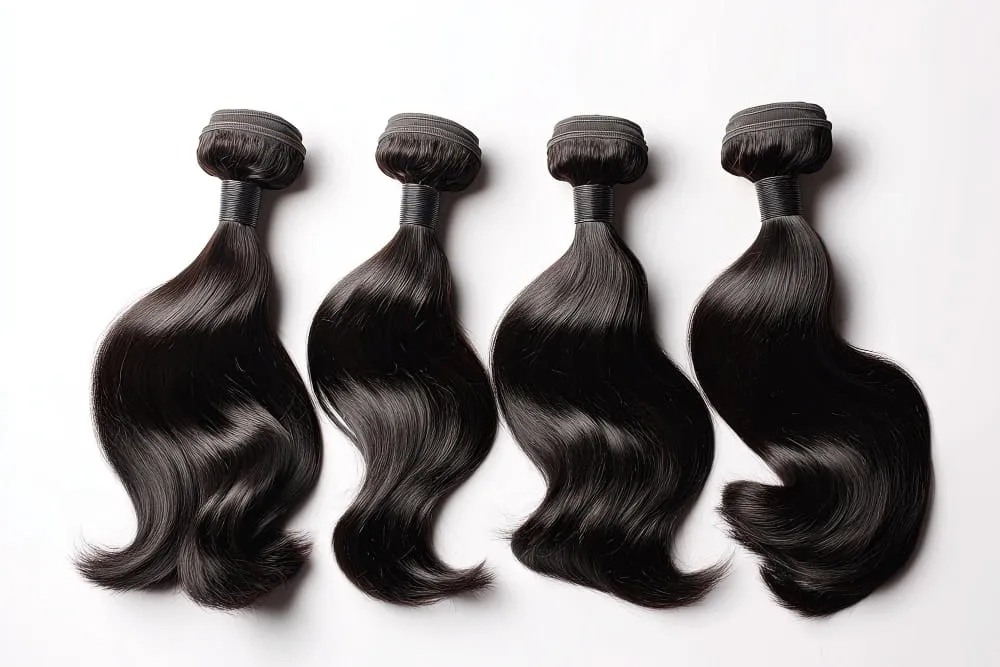
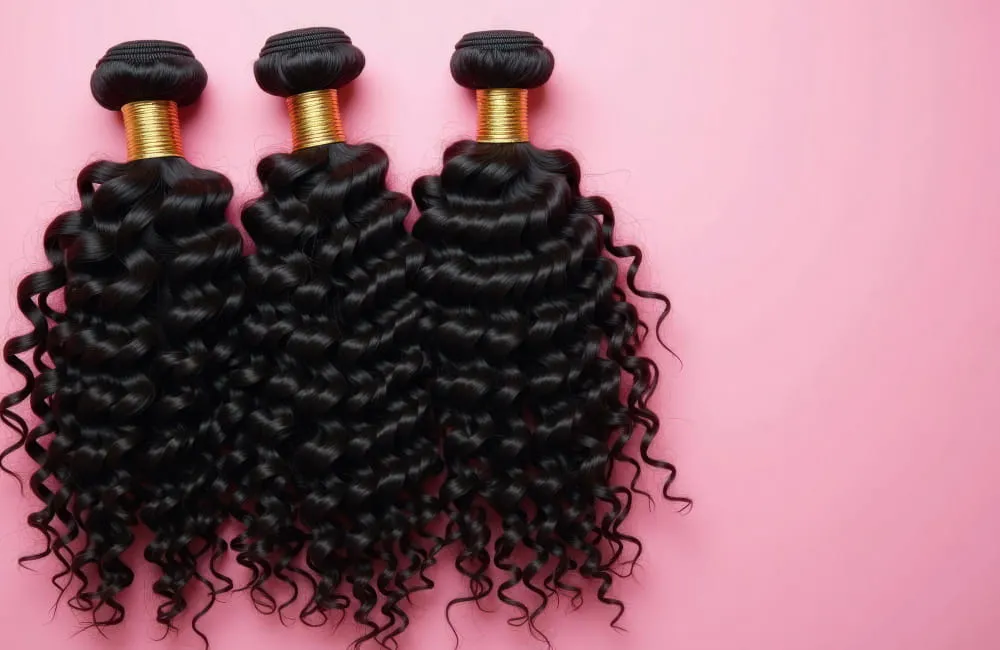
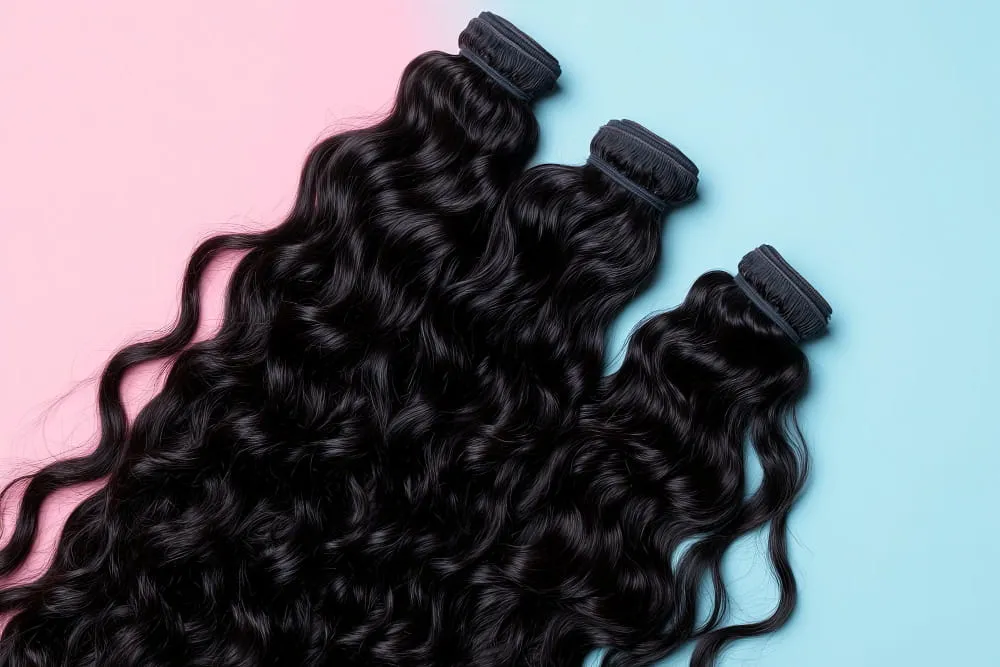
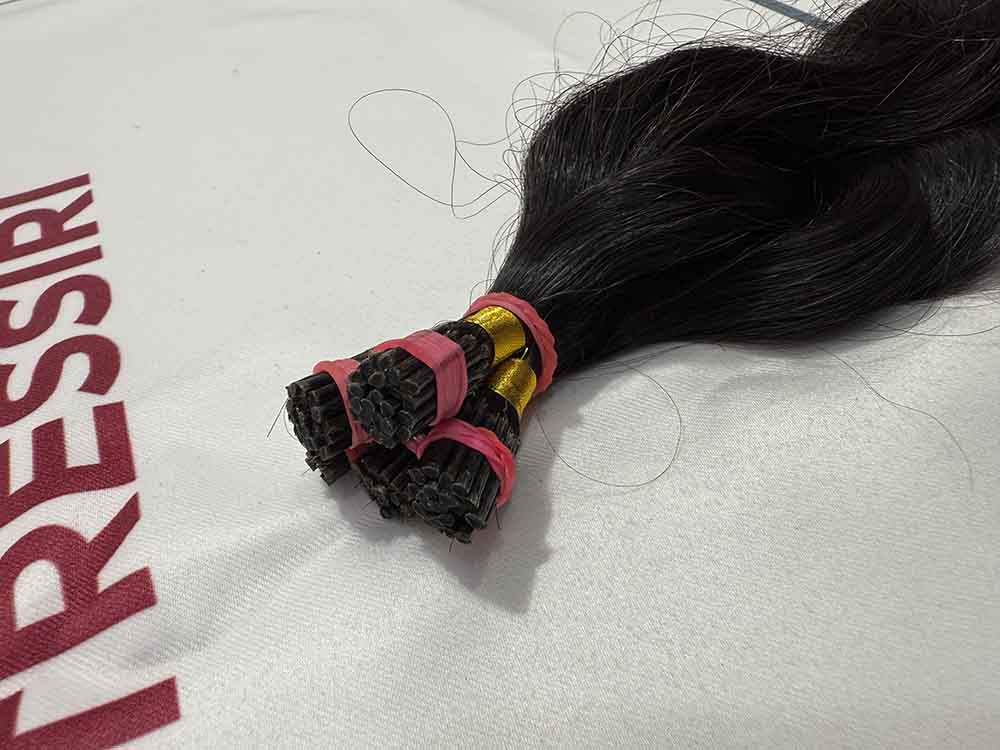
Need quality hair without waiting for international dispatch? Discover how to shop Tressiri’s limited USA stock for sew-ins, custom wigs, and upcoming appointments.
How Long Do Hair Bundles Last? What Actually Determines Their Lifespan
If you are comparing a $100 bundle with a more expensive raw hair bundle, softness on delivery does not tell you which one is the better value. The more useful question is: how long do hair bundles last in real life?
There is no honest answer based on price or a “hair grade” alone. A bundle's lifespan depends on the condition of the hair before it was made into a weft, how often it is installed, whether it is colored, the amount of daily heat and tension it receives, and how it is handled between installations.
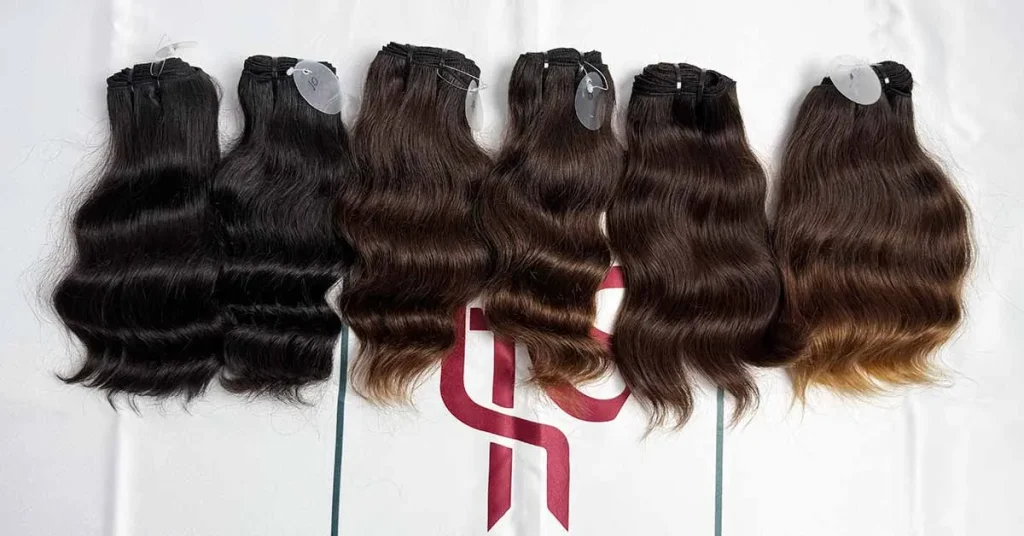
how long do raw Indian hair bundles last
As a practical guide, lower-quality or heavily processed human hair may provide only a few months of satisfactory wear. Better virgin hair can often last around six months to more than a year. High-quality raw Indian hair may remain usable for multiple installations and can last well beyond a year when it is carefully maintained. These are reasonable expectations, not guarantees. Your routine matters as much as the label on the package.
This guide explains how to judge lifespan before buying, what happens during each installation, and when replacing a bundle is safer than trying to revive it.
The short answer: how long do human hair bundles last?
Use this table as a realistic starting point rather than a promise.
Bleaching, excessive heat, cut wefts, buildup, damaged lace or tracks
The term “human hair” only describes the fiber. It does not confirm that the cuticles are intact, that the strands run in the same direction, or that the hair has avoided harsh processing. Two products carrying the same label can perform very differently after several washes.
Why some bundles look perfect at first but decline quickly
Fresh bundles can be coated to create extra slip and shine. That finish may make mixed or damaged hair feel impressive when it comes out of the package. After several washes, the coating gradually disappears and the condition underneath becomes easier to see.
Common warning signs include:
tangling that returns immediately after detangling;
matting at the nape;
unusually dry or thin ends;
heavy shedding from the weft;
a curl pattern that does not recover after washing;
hair that becomes stiff when styling products are removed.
Authentic raw hair should not look factory-perfect. Slight differences in wave pattern or color can be normal because the texture was not manufactured to make every bundle identical. Tressiri explains the broader quality differences in its Raw Indian Hair vs. Virgin Hair guide.
How long do raw Indian hair bundles last?
How long do raw Indian hair bundles last?
Well-selected raw Indian hair can last well beyond a year and remain suitable for multiple installations when properly cared for. Some owners keep premium raw bundles for several years, but that result should never be presented as automatic. Frequency of wear, coloring history, installation technique, maintenance, and storage all affect the final lifespan.
Raw Indian hair has an advantage because it has not been repeatedly altered to manufacture a uniform texture. When the cuticles remain intact and aligned, the strands experience less friction than hair assembled with reversed or badly damaged cuticles. This can reduce unnecessary tangling and help the hair retain strength.
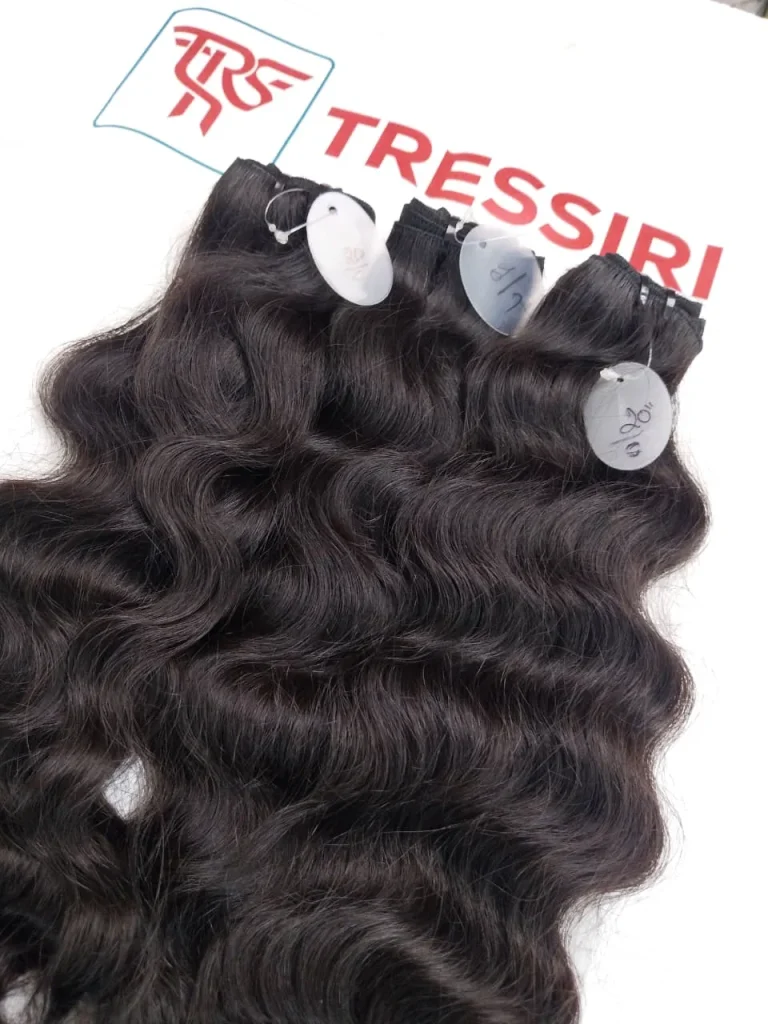
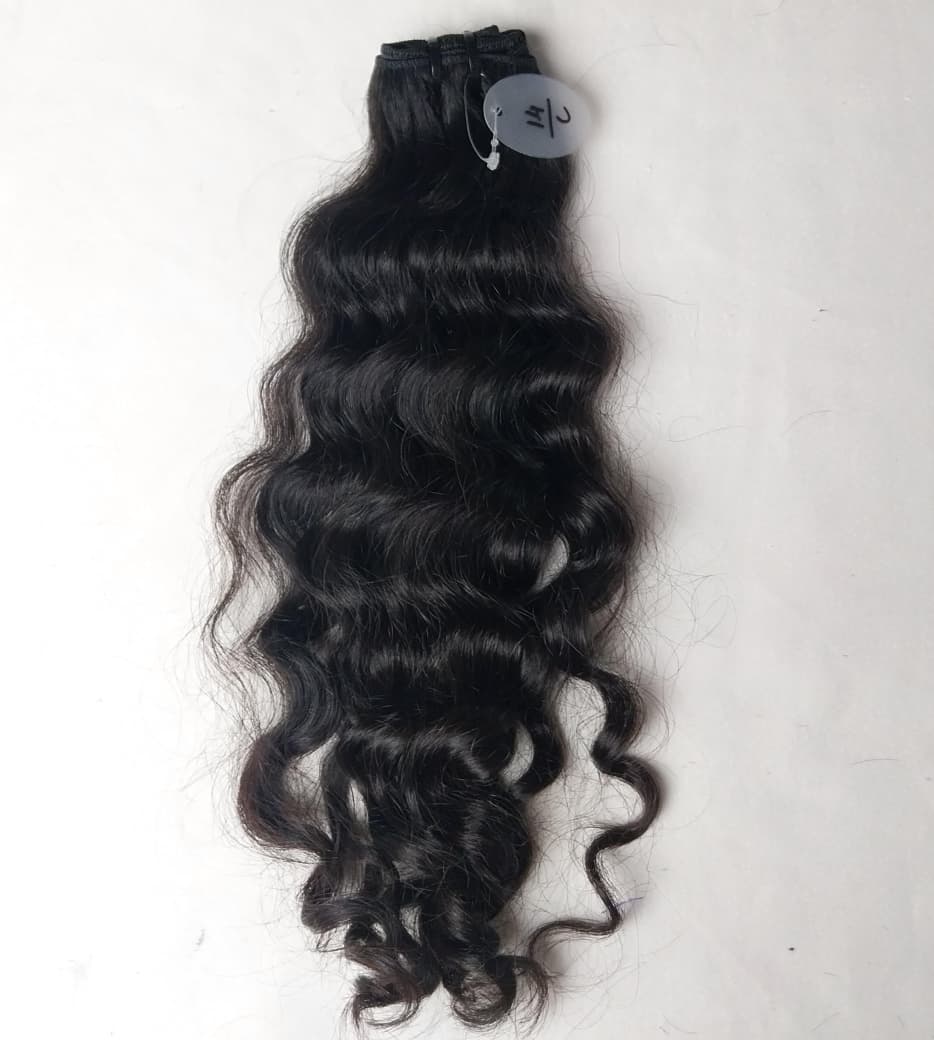
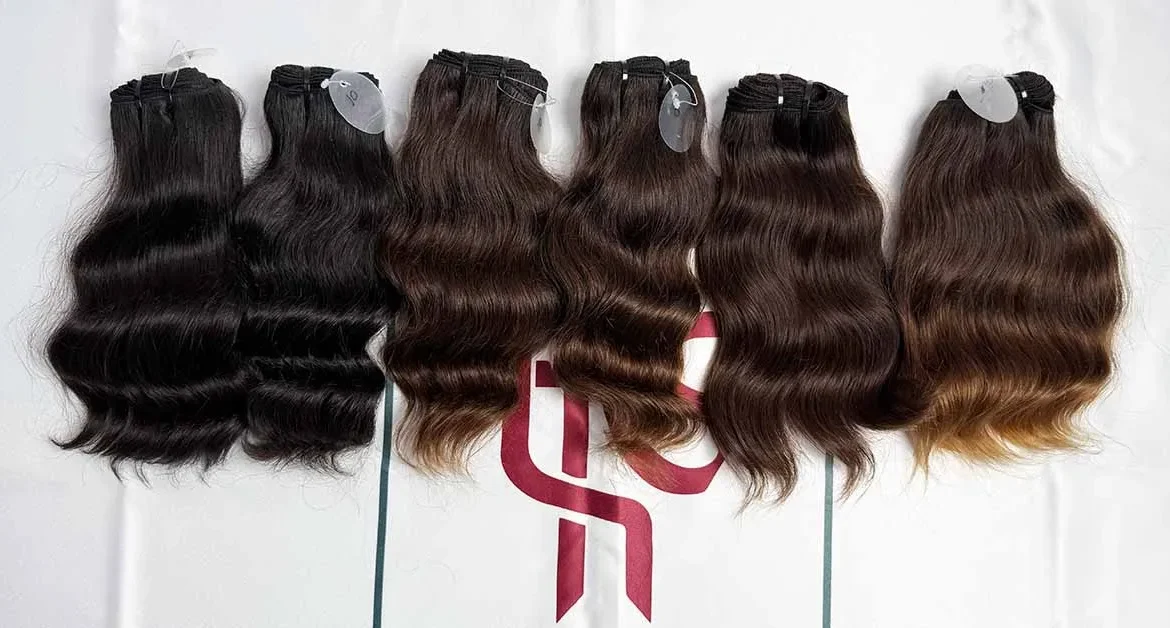
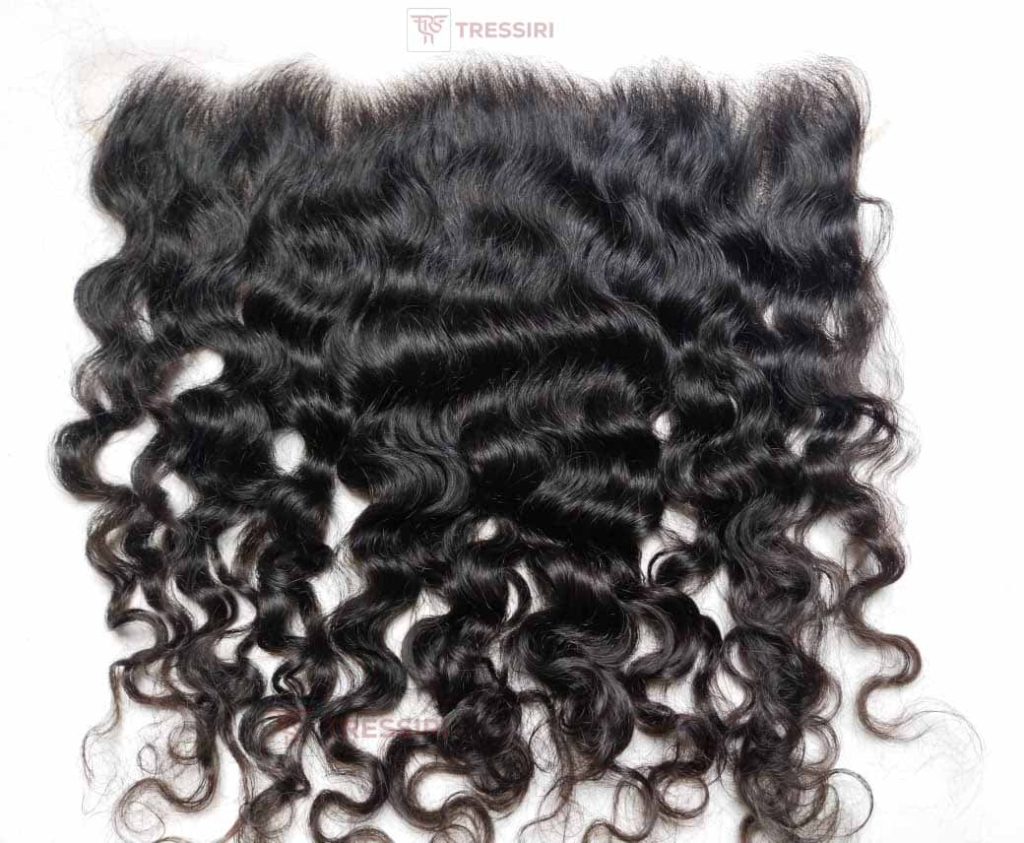
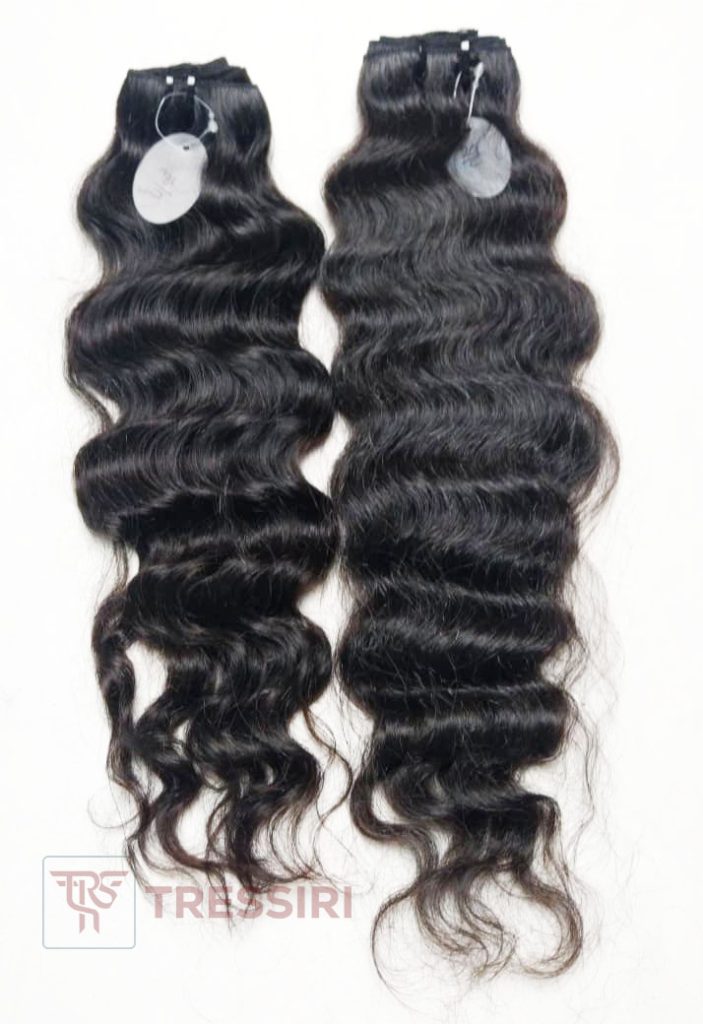
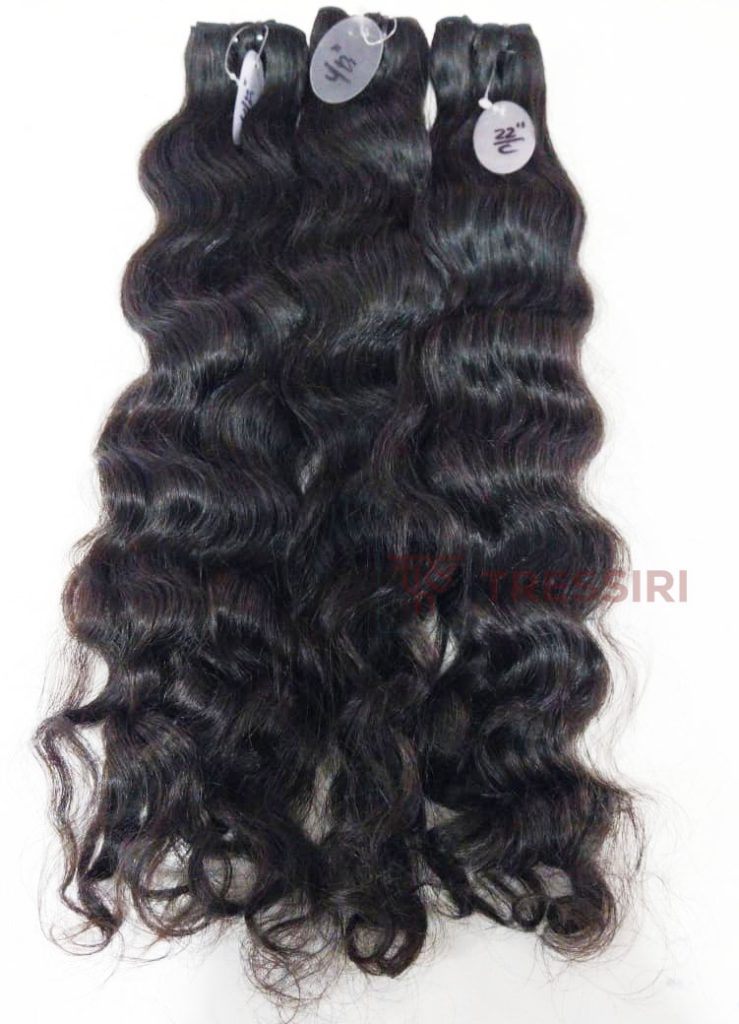
For shoppers who want natural movement rather than a perfectly identical factory wave, Tressiri's South Indian Raw Wavy Hair Bundle, USA Stock is made from South Indian temple hair, weighs approximately 100 grams per bundle, and is stocked in College Station, Texas for fast domestic shipping. Each bundle has its own natural wave pattern and character.
How many times can you reinstall hair bundles?
Quality bundles can often be reinstalled two, three, or more times. Counting installations, however, is less accurate than assessing condition. A person who wears bundles daily for eight weeks, applies heat several times a week, and colors them may create more wear than someone who uses the same bundles occasionally in a custom wig.
Before reinstalling, ask your stylist to check:
The weft: Is it secure, or has shedding created gaps?
The ends: Do they still have enough density for the intended style?
The mid-lengths: Can they be conditioned and detangled without constant knotting?
The color history: Has bleach or repeated permanent color weakened the strands?
The installation plan: Will previously cut tracks work for the new placement?
If the hair passes those checks, reinstalling can make a premium purchase more economical. If the weft is unstable or the ends are severely compromised, adding products will not restore lost hair.
Cost per installation is more useful than the lowest bundle price
Suppose one set costs $180 and remains attractive for one installation. Its hair cost is $180 per install. Another set costs $360 but performs well through three installations. Its hair cost is $120 per install.
This simple calculation helps separate affordability from the lowest checkout price:
Cost per installation = total hair cost divided by the number of satisfactory installations
Do not count an installation as satisfactory merely because the hair can still be attached. It should remain presentable, manageable, and appropriate for the finished style. Premium bundles provide value only when their quality and your maintenance allow genuine reuse.
Seven factors that decide how long hair bundles last
Seven factors that decide how long hair bundles last
1. Processing history
Bleaching, permanent coloring, texture processing, and harsh cleansing can weaken the hair shaft. A natural black or brown raw bundle usually begins with more structural integrity than hair that has already been lifted to a pale blonde.
2. Cuticle condition and direction
Intact, aligned cuticles help strands move together. Damaged or reversed cuticles increase friction, which can lead to tangling and matting. Ask sellers about sourcing and processing instead of relying on grade labels such as 10A or 12A, which are not a universal quality standard.
3. Weft construction
Strong hair can still shed early if the weft is damaged. Repeatedly cutting tracks, sewing through the weft, or rough removal can shorten the usable life of the entire bundle.
4. Length
Long hair receives more friction from clothing, car seats, pillows, and daily brushing. Thirty-inch bundles usually need more deliberate detangling and end care than an 18-inch installation.
5. Texture
Curly and kinky-curly textures are not necessarily lower quality, but they require more moisture and careful detangling. Straight hair may seem easier to maintain, while long wavy hair can tangle at the nape if it is not secured at night.
6. Installation and removal
Excessive tension, adhesive contact, careless cutting, and rushed removal can damage reusable hair. A skilled stylist protects the wefts and plans track placement with future use in mind.
7. Daily care
Sleeping with wet extensions, applying heavy products at the roots, skipping detangling, and using high heat without protection can reduce longevity even when the starting hair is excellent.
How to make hair bundles last longer
Detangle from the ends upward
Support the hair near the weft and work through small sections. Pulling a brush from the top through a knot places unnecessary force on the track and can increase shedding.
Wash the scalp and hair without piling it up
Let water travel downward and cleanse gently. Scrubbing the lengths together creates friction. Rinse thoroughly because conditioner and styling-product buildup can make hair feel heavy, dull, or tangled.
Condition the lengths, not the attachment points
Focus conditioner on the mid-lengths and ends. Heavy product at sewn tracks, bonds, tape, or lace can contribute to buildup and installation problems.
Dry completely before sleeping
Wet hair is more vulnerable to stretching, friction, and tangling. Make sure the scalp, tracks, and lengths are fully dry before bedtime.
Use heat strategically
Apply heat protectant and use the lowest effective temperature. Repeated daily passes at maximum heat can gradually damage even premium raw hair.
Protect the hair at night
Gently braid or wrap longer hair and use a satin bonnet, scarf, or pillowcase. The goal is to reduce friction and prevent the lengths from moving freely while you sleep.
Clean and store removed bundles correctly
Detangle, wash, condition, and dry the bundles completely. Store them in a clean, breathable place with the wefts organized. Do not seal damp hair in a plastic bag.
Does coloring reduce the lifespan of raw bundles?
Usually, yes. Raw human hair can often be professionally colored, but the ability to lift does not mean the process is harmless. Moving from natural black or brown to a light blonde requires more chemical action than depositing a darker tone. Each major chemical service can reduce moisture retention, elasticity, and long-term strength.
For the best chance of preserving the bundles:
have an experienced professional perform the color service;
test a small section first;
avoid repeated bleach sessions when possible;
use bond-supporting and conditioning treatments recommended by the colorist;
accept that very light color may shorten the hair's lifespan.
Be cautious of any seller who promises that raw hair can be bleached repeatedly with no effect on longevity.
When should you replace your bundles?
When should you replace your bundles?
Replace the hair when its condition prevents a safe, polished installation. Clear signs include extensive thinning, a separating weft, persistent matting after proper cleansing, severe chemical breakage, or ends that remain visibly sparse after trimming.
Sometimes only one bundle needs replacement. For example, the lowest tracks may experience the most friction and wear. A stylist may be able to combine two preserved bundles with one new matching bundle, provided the color and natural texture blend well.
What to ask before buying long-lasting hair bundles
A useful product page or seller should help you answer these questions:
Is the hair raw, virgin, or processed human hair?
Is the texture natural or steam processed?
What is the approximate weight of each bundle?
Are natural color and texture variations expected?
Can the hair be professionally colored?
Where is the available inventory located?
What delivery timeline applies to this specific item?
How many bundles will the planned length and style require?
For quantity planning, use Tressiri's detailed guide, How Many Bundles Do I Need for a Sew In?. Longer lengths generally need more bundles because the same bundle weight is distributed across longer strands.
Choosing between immediate delivery and the widest selection
Your deadline should influence the product you buy. Hair already stocked in the United States is the safer option when an appointment is approaching. A made-to-order or India-stock item can offer a broader selection, but it should not be purchased on the assumption that international delivery behaves like domestic shipping.
Final answer: are long-lasting bundles worth paying more for?
The answer depends on performance, not marketing language. Long-lasting bundles are worth the higher initial cost when the hair arrives in strong condition, matches the installation you want, can be maintained without constant tangling, and remains suitable for genuine reuse.
Final answer: are long-lasting bundles worth paying more for?
When asking how long do hair bundles last, think in terms of condition, installations, and cost per wear. High-quality raw Indian hair may last well beyond a year and through multiple installs, but proper care and professional chemical services are essential. Buy based on transparent product details, protect the wefts during installation and removal, and replace damaged hair when it can no longer produce a safe, polished result.
Frequently asked questions
How long do human hair bundles last?
Heavily processed human hair may last only a few months. Good virgin hair often lasts around six months to more than a year, while premium raw human hair may remain usable well beyond a year with proper maintenance. Actual lifespan varies with wear, heat, color, installation, removal, and storage.
How long do raw Indian hair bundles last?
High-quality raw Indian hair can often be reused through multiple installations and may last one year or longer. Some owners keep well-maintained bundles for several years, but no lifespan is guaranteed.
Can you reuse bundles after a sew-in?
Yes, if the wefts remain secure and the hair is not severely tangled, thinned, or chemically damaged. Careful removal, cleansing, complete drying, and organized storage improve the chance of a successful reinstall.
How many times can hair bundles be reinstalled?
Quality bundles may be reinstalled two, three, or more times. Evaluate the hair's condition rather than relying on a fixed number because installation length, daily care, heat, and coloring create different levels of wear.
Does bleaching shorten the life of hair bundles?
Yes. Bleaching changes the hair's structure and can increase dryness and breakage. Professional coloring, strand testing, controlled lifting, and careful aftercare can reduce damage, but they cannot make bleaching risk-free.
Are expensive hair bundles always better?
No. Price alone does not prove sourcing, cuticle alignment, limited processing, or strong weft construction. Compare product details, realistic care guidance, inventory location, and seller policies before purchasing.
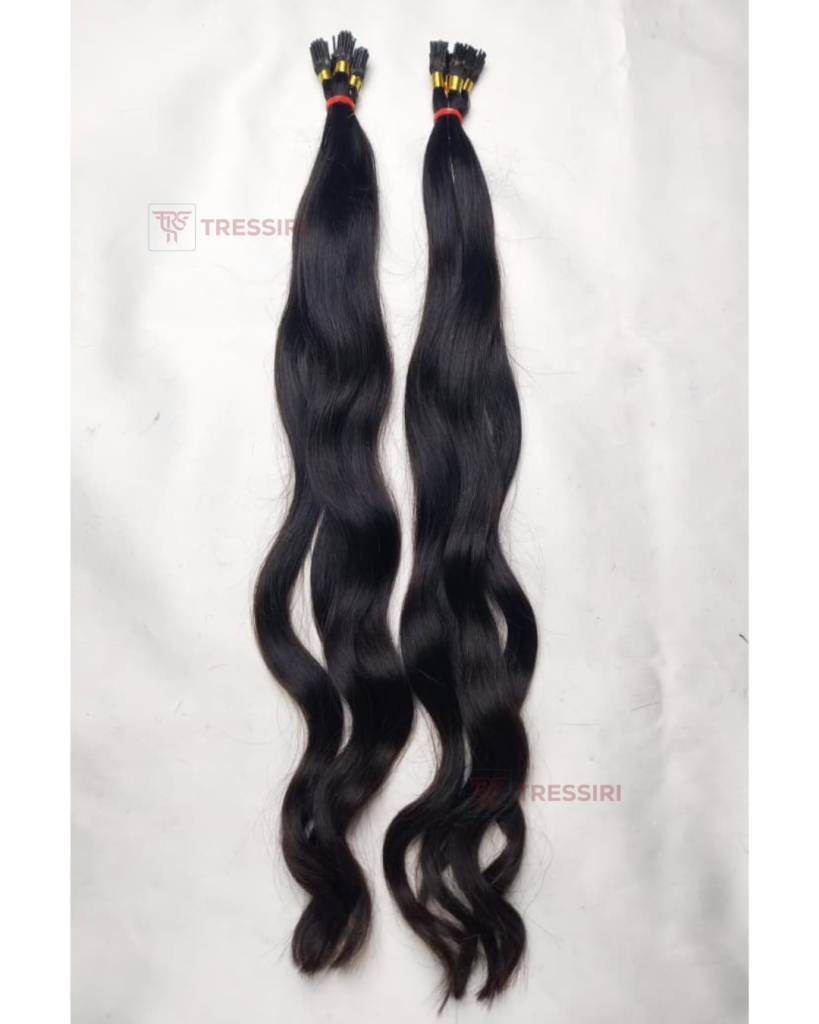
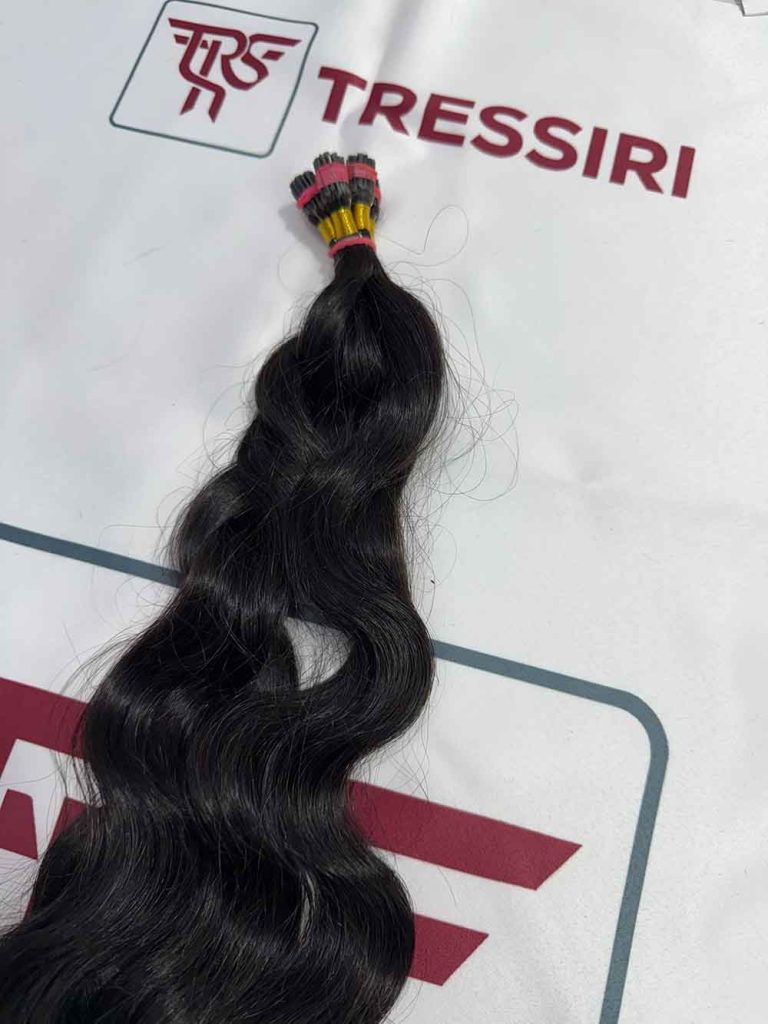
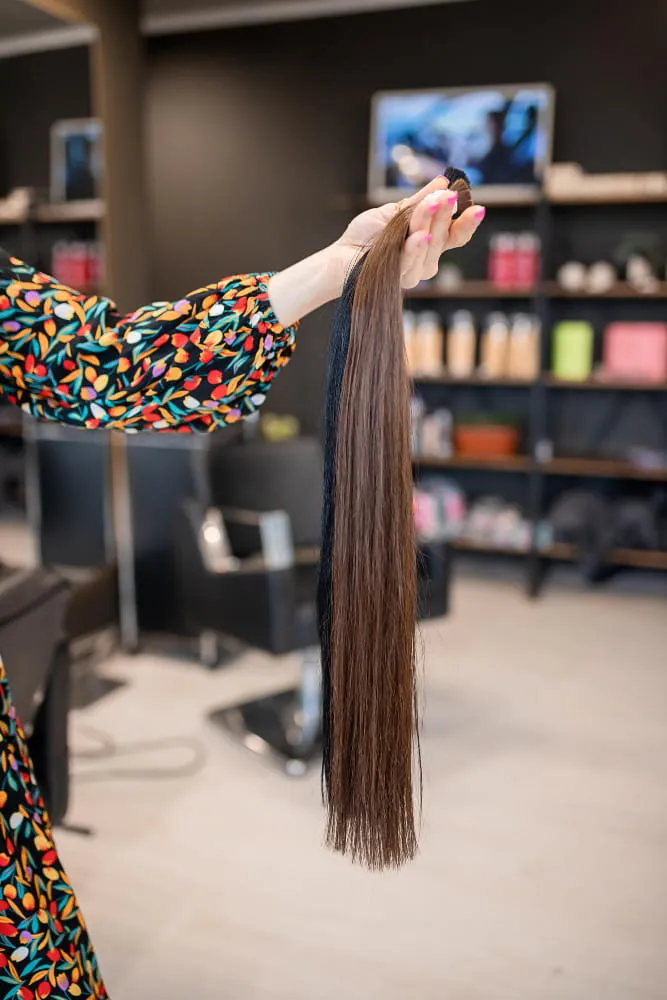
Individual strand extensions are popular among customers who want added length and fullness without installing a full weft. Raw Indian K-tip extensions allow stylists to place small sections of hair throughout the head for a customized and natural-looking result.
Because raw Indian K-tip extensions are installed strand by strand, the placement can be adjusted according to the client’s natural hair density, haircut and desired volume. Tressiri offers U-tip, I-tip and flat-tip extension options for customers and professional stylists throughout the United States.
However, terms such as K-tip, U-tip, I-tip and flat-tip are sometimes used interchangeably, even though the installation methods are not identical. Understanding the difference can help you choose an extension type that fits your hair, lifestyle and stylist’s preferred technique.
Tressiri offers individual strand-tip extensions in U-tip, I-tip and flat-tip formats, giving customers and professional stylists several installation options.
Raw Indian K-Tip Extensions: What to Know Before You Buy
What Are Raw Indian K-Tip Extensions?
K-tip is short for keratin-tip. Each small section of extension hair has a keratin-based bond at the top. During professional installation, a stylist uses a controlled heating tool to soften the bond and attach the extension to a small section of the client’s natural hair.
Because the extensions are installed strand by strand, the stylist can control:
Where additional fullness is added
How the extensions are distributed
How much hair is placed around the sides and back
How the extensions blend with the client’s haircut
Which areas require more or less density
Properly placed bonds can remain discreet beneath the natural hair while allowing the extensions to move independently. K-tip installations are commonly used by customers seeking natural-looking length and volume.
Raw Indian hair adds another element to the installation. Its natural movement and texture can make it suitable for clients who do not want hair that appears excessively uniform or artificially processed.
Benefits of Raw Indian K-Tip Extensions
Raw Indian K-tip extensions combine individual strand placement with the natural movement and texture associated with raw Indian human hair. They can be used to add length, improve fullness or create a more customized extension installation.
Customers may choose raw Indian K-tip extensions because they offer:
Individual strand movement
Customizable placement
Natural-looking length and fullness
Straight, wavy and curly texture options
Flexible styling
Less visible attachment points when properly installed
Options suitable for partial or full-head installations
The final appearance of raw Indian K-tip extensions depends on texture matching, strand quantity, professional installation and proper maintenance.d texture. Customers seeking natural movement and character may prefer raw Indian hair.
What Is the Difference Between K-Tip, U-Tip, I-Tip and Flat-Tip Extensions?
What Is the Difference Between K-Tip, U-Tip, I-Tip and Flat-Tip Extensions?
These names describe the attachment at the top of each extension strand. Although they belong to the same general family of individual strand extensions, they are not all installed in the same way.
U-Tip Extensions
U-tip extensions have a keratin bond shaped somewhat like the letter U. They may also be called nail-tip or fusion extensions.
During installation, a trained stylist softens the keratin bond with a professional heat tool. The bond is then shaped around a small section of the client’s natural hair.
U-tip extensions may be a good choice for customers who want:
A traditional fusion installation
Individual strand movement
Customizable placement
Added length and density
Bonds that can be concealed beneath the natural hair
Because heat and keratin bonding are involved, U-tip extensions should be installed and removed by an experienced extension professional.
Flat-Tip Extensions
Flat-tip extensions also use a keratin-based attachment, but the top is designed with a flatter shape.
The flatter bond may help the extension sit close to the head when installed correctly. This can be useful for clients who prefer a less rounded attachment point.
Raw Indian flat-tip extensions may be considered for:
Full-head installations
Strategic volume placement
Length enhancement
Clients who want individual movement
Installations where a flatter bond is preferred
The final comfort and visibility depend heavily on correct section size, bond placement and professional installation.
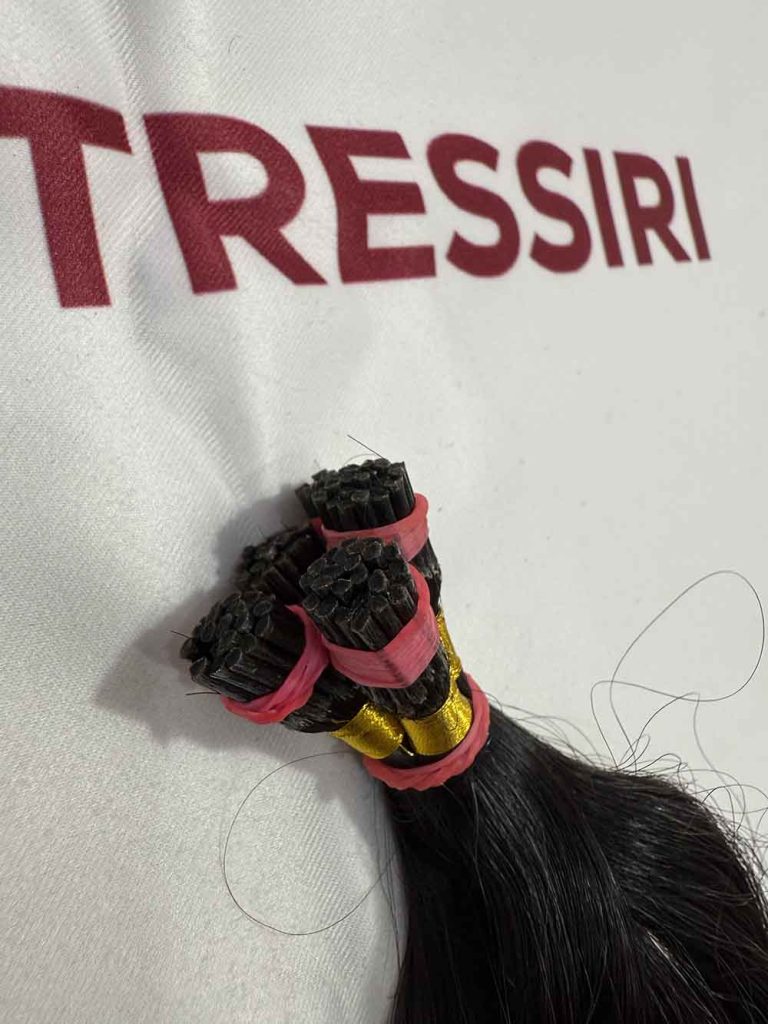
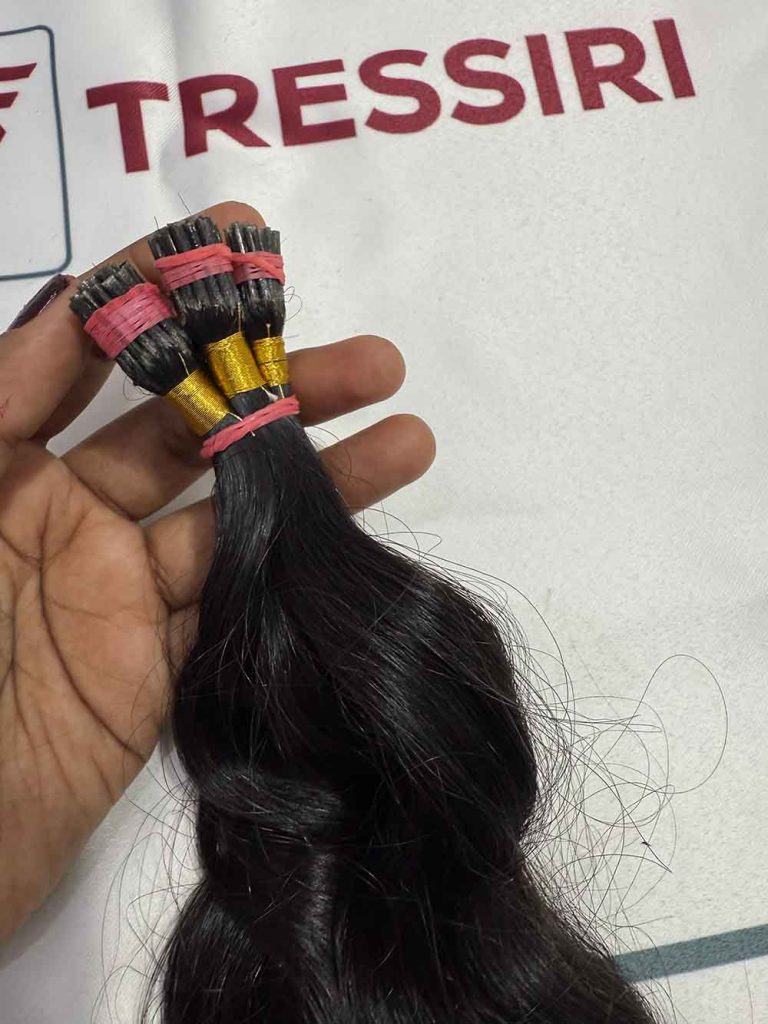
I-tip extensions have a narrow, stick-like tip. Unlike traditional K-tip and U-tip extensions, they are commonly installed using small beads or microlinks rather than melting the bond with heat.
The stylist threads a small section of natural hair through a bead, inserts the I-tip extension and secures the bead with a professional tool.
I-tips may be suitable for customers who prefer:
A no-heat attachment method
Individual strand placement
Bead or microlink installations
Extensions that can potentially be repositioned during maintenance
An alternative to heat-fused bonds
Although I-tips are often displayed alongside keratin-tip extensions, their bead installation makes them technically different from heat-fused K-tips.
Raw Indian K-Tip Extensions
How to Choose the Right Raw Indian K-Tip Extensions
The best option depends on your stylist, natural hair and preferred installation method.
Choose U-tip extensions when you want a traditional keratin fusion installation and your stylist specializes in heat-bonded extensions.
Choose flat-tip extensions when you want a keratin fusion option with a flatter attachment shape that can sit close to the natural hair.
Choose I-tip extensions when you prefer a bead or microlink installation without using heat to fuse the attachment.
Before ordering, speak with the professional who will complete the installation. Some stylists work with only one or two extension methods and may require a particular tip size, strand weight or bond shape.
Raw Indian K-tip extensions can work for Black clients, but the correct answer depends on the client’s natural texture, density, styling routine and desired finish.
The installation may be considered by customers who want:
Length without a full sew-in
Added density in selected areas
Individual extension movement
Flexible ponytails and parting
A natural blend with straightened or textured hair
More styling freedom than a full weft installation
Texture matching is especially important. Straight extensions may work for clients who regularly wear their natural hair straight. Wavy or curly extensions may require less daily manipulation when they are closely matched to the client’s usual texture.
A consultation with an experienced stylist is necessary before installation, particularly for fine edges, fragile hair, active shedding or areas with low density.
How Many K-Tip Extensions Do You Need?
How Many K-Tip Extensions Do You Need?
There is no universal strand count that works for every client. The amount depends on:
Natural hair thickness
Head size
Current hair length
Desired extension length
Whether the goal is volume, length or both
The weight of each extension strand
The stylist’s installation plan
A partial installation for fullness requires less hair than a complete transformation involving substantial length.
Some individual-tip products are sold in approximately 100-gram sets containing around 100 strands, but quantities differ among manufacturers. One currently indexed raw Indian tip-extension listing, for example, describes approximately 100 to 110 grams and 100 to 110 strands per set.
Do not purchase based only on a general online estimate. Ask your stylist how many grams or strands are required before placing the order.
How to Select the Right Length
Longer does not automatically mean better. The right length should blend with your natural hair and support the result you want.
Consider:
Your current natural hair length
The difference between your hair and the extensions
Your height
Your preferred final hairstyle
Whether the extensions will be cut into layers
Whether you want natural fullness or a dramatic transformation
A significant difference between the natural hair and extension length may require additional strands and professional layering to create a convincing transition.
For example, adding moderate length to shoulder-length hair may blend more easily than installing very long extensions into a short, blunt haircut.
Choosing the Right Texture
The best texture for raw Indian K-tip extensions is usually the texture that most closely matches how the client wears their natural hair. A close match reduces the amount of daily styling required to maintain a natural blend.
Straight
Straight raw Indian extensions may suit customers who wear their natural hair straight or regularly use a smooth blowout.
Wavy
Wavy extensions can create movement and may work for clients who prefer an effortless, textured finish.
Curly
Curly extensions can add volume and definition, but the curl pattern should be reviewed carefully. Raw curls naturally vary and may not look completely identical from one set to another.
The most practical texture is usually the one that resembles how you wear your hair most often. Selecting a dramatically different texture may require more frequent styling to maintain the blend.
How Long Do K-Tip Extensions Last?
Wear time varies according to:
Installation quality
Natural hair growth
Home maintenance
Bond size
Hair products
Brushing habits
Heat styling
Lifestyle
The condition of the natural hair
Professional sources commonly describe several months of wear for heat-fused K-tips, but this should not be treated as a guarantee. Maintenance and removal timing must be determined by the installing stylist.
Leaving extensions installed longer than recommended can increase tangling, matting and stress near the attachment area.
How to Care for Individual Tip Extensions
Your stylist’s instructions should take priority because care requirements can vary between U-tip, flat-tip and I-tip installations.
Proper care can help protect both the extension hair and the attachment points. After installing raw Indian K-tip extensions, follow the maintenance instructions provided by the stylist who completed the service.
General maintenance may include:
Brush gently using an extension-appropriate brush.
Support the attachment area while detangling.
Begin detangling at the ends and move upward gradually.
Keep heavy oils and conditioners away from bonds or beads.
Dry the attachment areas thoroughly after washing.
Avoid pulling or repeatedly touching the bonds.
Separate the strands regularly to help prevent matting.
Use heat protection before styling the extension hair.
Sleep with the hair dry and loosely secured.
Attend maintenance or removal appointments as directed.
Daily detangling is particularly important because shed natural hairs can remain trapped around the attachment until the extensions are removed. Professional guidance also recommends keeping the roots smooth and avoiding buildup around the bonds.
Can Raw Indian K-Tip Extensions Be Reused?
Can Raw Indian K-Tip Extensions Be Reused?
Reusability depends on the attachment type and the condition of the hair.
I-tip hair may sometimes be reused if the extension hair remains in good condition and the tip is compatible with reinstallation. The beads are normally replaced during maintenance.
Previously installed fusion hair may require removal of the old bond and professional re-tipping before it can be installed again. Not every stylist offers this service, and not every removed strand remains suitable for reuse.
Ask your stylist about re-tipping and reuse before installation. Do not assume every K-tip set can automatically be reused.
Professional Installation Matters
Extensions that are installed too tightly or placed on sections that cannot safely support the strand weight may create unnecessary tension. The American Academy of Dermatology recommends taking precautions to prevent hair damage from extensions, because repeated pulling can contribute to traction alopecia
Professional installation helps determine:
Appropriate strand weight
Safe placement
Correct spacing
Balanced distribution
Comfortable movement
Proper blending and cutting
Correct maintenance timing
Safe removal
Tressiri supplies the extension hair but does not replace the advice or services of a licensed or properly trained extension professional.
Types of Raw Indian K-Tip Extensions Available from Tressiri
Tressiri offers several individual strand extension formats. The collection includes U-tip, flat-tip and I-tip extensions. Although these options are commonly compared when shopping for raw Indian K-tip extensions, their attachment methods are different.
U-tip and flat-tip extensions use keratin-based fusion attachments. I-tip extensions are generally installed with beads or microlinks without melting the tip. Customers should select the format recommended by their extension stylist.
Available tip choices include:
U-tip keratin extensions
Flat-tip keratin extensions
I-tip microlink extensions
Select the attachment method, length and texture with your stylist before ordering.
Save 5% on Tressiri I-Tip Extensions
Tressiri customers can receive 5% off eligible I-tip hair extensions with coupon code:
ITIP52026T
Enter the coupon code during checkout. The discount applies to the eligible I-tip product, not automatically to every U-tip, flat-tip or K-tip product.
Shop Tressiri I-Tip Hair Extensions:
Tressiri offers raw Indian K-tip extensions and related individual strand extension options for customers, hairstylists and beauty professionals across the United States.
Available options include:
U-tip keratin extensions
Flat-tip keratin extensions
I-tip microlink extensions
Before ordering raw Indian K-tip extensions, confirm the required tip type, texture, length, grams and strand quantity with your stylist.
No. Traditional K-tip extensions use a heat-softened keratin bond. I-tip extensions are generally attached using beads or microlinks without melting the tip.
What is another name for K-tip extensions?
They may be called keratin-tip extensions, keratin bond extensions, fusion extensions or pre-bonded extensions.
Are U-tip extensions K-tips?
Yes. U-tips are a type of pre-bonded keratin or fusion extension. The keratin attachment has a U-shaped or nail-tip design.
Are flat-tip extensions installed with heat?
Traditional keratin flat-tips are generally installed using a controlled fusion tool. Customers should confirm the exact installation method with their stylist and the product description.
Can I install K-tip extensions myself?
Professional installation is strongly recommended. Incorrect section size, heat application or bond placement can create discomfort, visible attachments, slippage or stress on the natural hair.
Can I use oil on K-tip extensions?
Oil can be applied carefully to the lengths and ends when appropriate, but oily products should generally be kept away from the attachment area because they may affect bonds or cause bead slippage.
Can K-tip extensions be curled or straightened?
Human hair extensions can generally be heat styled with appropriate temperature control and heat protection. Avoid placing styling tools directly on keratin bonds or beads.
Does Tressiri carry different individual tip extensions?
Yes. Tressiri offers U-tip, I-tip and flat-tip extension options. Confirm availability, texture, color and length on the relevant product page before ordering.
Is there a Tressiri I-tip coupon?
Yes. Use ITIP52026T to receive 5% off eligible Tressiri I-tip hair extensions.
Where can I buy raw Indian K-tip extensions?
Tressiri offers raw Indian K-tip extensions and related U-tip, flat-tip and I-tip hair options for customers and professional stylists throughout the United States.
Are raw Indian K-tip extensions suitable for a full-head installation?
Yes, raw Indian K-tip extensions may be used for partial fullness or a full-head installation. The required number of strands depends on the client’s natural hair density, current length and desired result.
Boho braids can look soft, full, and effortless, but buying the right amount of human hair is not always simple. One store may sell hair in 50-gram packs, another may offer 100-gram bundles, and your braider may simply tell you to bring “two packs” without specifying the weight.
That is why the best way to decide how much human hair for boho braids is to calculate by grams, not by the number of packs.
The amount you need depends on your braid size, desired fullness, finished length, and how frequently the loose human-hair pieces will be added throughout the style. This guide will help you estimate whether you may need 100, 200, 300 grams, or more before placing your order.
How Much Human Hair for Boho Braids?
How Much Human Hair for Boho Braids?
For many boho braid installations, shoppers may need approximately 100 to 300 grams of human hair for the loose curls. A lighter style with only a few curly pieces may require less, while small, long, or extra-full boho braids may require considerably more.
Here is a practical starting guide:
Desired boho braid result
Suggested human hair amount
Light curl accents
100 to 150 grams
Medium fullness
150 to 200 grams
Full boho braids
200 to 300 grams
Extra-full or very long braids
300 grams or more
These are planning estimates, not universal guarantees. Every braider uses a different installation method, so confirm the final amount with your stylist before ordering.
Why You Should Calculate Human Hair by Grams
The word “pack” can be misleading because pack sizes are not standardized.
For example:
Two 50-gram packs equal 100 grams.
Two 100-gram bundles equal 200 grams.
Four 50-gram packs equal 200 grams.
Six 40-gram packs equal 240 grams.
A recommendation of “four packs” could therefore mean very different amounts depending on the seller.
Before buying human hair for boho braids, check the product description for the actual weight. Comparing grams helps you understand how much hair you are truly receiving and makes it easier to follow your braider’s recommendation.
How Much Human Hair for Boho Braids With Light Curls?
You may need around 100 to 150 grams if you want only a few loose curls placed between the braids.
This amount may work for styles where:
The curls are used as accents rather than the main feature.
The braids are medium or large.
The finished length is relatively short.
The stylist adds loose pieces only around the front, sides, and ends.
A lighter amount can create a clean boho appearance without making the style feel too dense or heavy. However, 100 grams may not be enough when the curls are expected to cover most of the head.
How Much Human Hair for Boho Braids With Medium Fullness?
How Much Human Hair for Boho Braids With Medium Fullness?
For a balanced, visible boho look, approximately 150 to 200 grams may be a practical starting range.
This amount can work well when you want curls distributed throughout the hairstyle, but do not want an extremely full finish. It may suit medium-sized knotless braids, shoulder-length styles, and everyday boho braids where the loose hair remains noticeable without overpowering the braided sections.
For many shoppers, 200 grams provides more flexibility than buying only 100 grams. The stylist can adjust the number of curls during installation, and any unused clean hair can be saved.
How Much Human Hair for Boho Braids With a Full Finish?
A full boho braid installation may require around 200 to 300 grams of human hair.
This range may be more appropriate when:
Loose curls are added throughout the entire head.
The braids are small or medium-small.
You want a thick, highly visible curly effect.
The finished style is long.
The stylist uses several loose pieces in each section.
Full boho braids can require more human hair because the curls are not limited to the ends. They may be added near the roots, through the middle of the braids, and around the lower sections.
The more frequently curls are added, the faster the available hair will be used.
How Much Human Hair for Boho Braids at Extra-Long Lengths?
Extra-long boho braids may require 300 grams or more, especially when the style is both long and full.
Length changes the appearance of density. The same 200 grams that looks full at 16 inches may appear lighter when stretched across a 24-inch or 30-inch hairstyle.
Longer hair may also require more careful sectioning because each loose piece must retain enough density from top to bottom. Very thin, long strands can look sparse near the ends, even when several pieces are installed.
For waist-length or hip-length boho braids, discuss both the desired length and curl fullness with your braider before choosing the amount.
How Braid Size Changes the Amount You Need
Braid size has a major effect on how much human hair is needed for boho braids.
Large Boho Braids
How much human hair for boho braids: Large braids usually involve fewer total sections. Because there are fewer braids, the stylist may use fewer loose human-hair pieces.
A light or medium-full large-braid style may need around 100 to 200 grams, depending on length and the number of curls added.
Medium Boho Braids
How much human hair for boho braids: Medium braids are one of the most flexible options. They provide enough sections for curls to be distributed throughout the head without requiring as much hair as very small braids.
Many medium boho styles may fall within the 150 to 250 gram range.
Small Boho Braids
How much human hair for boho braids: Small braids create more individual sections. That gives the stylist more opportunities to add loose curls, which can increase the total amount of human hair needed.
Small, full boho braids may require around 200 to 300 grams or more.
Micro Boho Braids
How much human hair for boho braids: Micro braids can require a higher quantity because the hairstyle contains many small sections. Even when only a small amount of loose hair is added to each braid, the total can add up quickly.
Ask the braider for a specific gram recommendation before purchasing hair for a micro installation.
How Length Affects the Amount of Human Hair
How Length Affects the Amount of Human Hair
The finished length can influence both the amount and the way the density appears.
14 to 16 Inches
How much human hair for boho braids: Shorter boho styles may need less hair because the curls do not have to cover as much length. Around 100 to 200 grams may be enough for a light or medium-full result.
18 to 20 Inches
How much human hair for boho braids: This is a common length range for boho braids. Depending on the braid size and desired fullness, you may need approximately 150 to 250 grams.
22 to 24 Inches
How much human hair for boho braids: Longer curls can appear thinner because the density is spread over more length. A fuller style may need approximately 200 to 300 grams.
26 Inches and Longer
How much human hair for boho braids: For very long boho braids, consider starting around 250 to 300 grams, particularly when you want curls distributed throughout the entire hairstyle.
These ranges should always be adjusted based on your stylist’s technique.
Should You Buy Bulk Hair or Wefted Bundles for Boho Braids?
For most boho braid installations, bulk human hair is the more direct option.
Bulk hair is loose hair without a machine-made weft. It can be separated into smaller sections and added individually between the braids. This makes it useful for boho braids, goddess braids, human-hair braiding styles, and other installations that require loose strands.
Wefted hair bundles have the hair attached to a stitched track. They are commonly used for sew-ins, wigs, ponytails, and other weft-based styles.
Some stylists may cut hair from a weft and use it for boho braids, but cutting the weft can create extra preparation and may cause shedding if the hair is not handled carefully.
Before ordering, ask your braider:
Do you want loose bulk human hair or hair attached to a weft?
That one question can prevent you from purchasing the wrong product format.
Bulk Hair vs Bundles: Why the Weight Still Matters
The word “bundle” is sometimes used loosely in the hair industry. A bulk hair product may be called a bundle even though it has no weft.
Always check the product details rather than relying only on the product name.
Look for:
Weight in grams
Whether the hair is bulk or wefted
Available length
Texture
Natural or processed color
Number of pieces included
A product listed as one bundle may contain 50 grams, 100 grams, or another amount. That is why the weight is more useful than the bundle count.
Which Human Hair Texture Is Best for Boho Braids?
Which Human Hair Texture Is Best for Boho Braids?
The best texture depends on the finished look you want and how much styling your braider plans to do.
Wavy Bulk Human Hair
Wavy hair can create soft, relaxed curls that blend naturally into bohemian braid styles. It is a good option when you want movement without a very tight curl pattern.
Curly Bulk Human Hair
Curly bulk hair creates a more noticeable, voluminous finish. Because the curl pattern is already defined, it may require less heat styling before installation.
Straight Bulk Human Hair
Straight bulk hair gives the stylist more control over the final curl pattern. It can be curled, waved, or customized, but it may require additional preparation and styling.
When choosing texture, consider how you plan to maintain the loose pieces after installation. A curl pattern that matches your desired finished look may be easier to refresh.
Raw Indian bulk hair can be a useful choice for boho braids because it offers natural movement and can be styled according to the desired finish.
Since bulk hair does not have a weft, the braider can separate the hair into smaller pieces and place them throughout the braids. Depending on the natural texture, the hair may be worn wavy, curled, or customized.
Quality also matters because the loose sections of boho braids remain exposed. They experience friction from clothing, pillows, hands, weather, and regular movement. Hair that tangles excessively or becomes dry quickly can make the style harder to maintain.
When shopping, do not evaluate hair only by how it looks in the product photo. Also consider its weight, texture, processing level, and whether it is suitable for loose braiding use.
How Much Human Hair for Goddess Braids?
Goddess braids and boho braids are often discussed together because both styles may include loose curly pieces.
A light goddess braid style may use around 100 to 150 grams, while a fuller installation may need 200 to 300 grams or more.
The biggest factor is how many loose pieces the stylist plans to add. A style with curls only at the ends will require less hair than one with curls added from the roots through the full length.
Does Your Natural Hair Density Change the Amount Needed?
How much human hair for boho braids? Your natural hair density can influence the number of braids your stylist creates.
Someone with thick natural hair may have more sections or larger sections, depending on the chosen style. Someone with lower-density hair may need fewer braids, but the stylist may still use more loose human hair to create a fuller visual result.
The amount of human hair is therefore not determined by natural hair density alone. It must be considered together with braid size, total number of braids, length, and desired fullness.
How to Avoid Running Out of Hair During Your Appointment
Running out of hair halfway through a braid appointment can delay the style or force the braider to reduce the number of curls.
Quantity is not the only consideration when deciding how much human hair for boho braids to purchase. The finished hairstyle should not feel painfully tight or place excessive tension on the scalp. The American Academy of Dermatology explains that frequently wearing tightly braided hairstyles or heavy extensions can contribute to traction alopecia. Ask your braider to reduce tension if you experience pain, stinging, bumps, or excessive pulling during installation.
Before ordering, send your stylist the exact product link. Ask them to check the weight, texture, and length rather than simply approving the number of packs.
Also confirm whether their recommendation includes:
Synthetic braiding hair used to create the braids
Human hair used only for the loose curls
Extra human hair for the ends
Additional hair in case the style needs more fullness
Synthetic braiding hair and loose human hair serve different purposes. When a stylist says you need six packs, make sure you know which type of hair they are referring to.
Should You Buy Extra Human Hair?
Buying a small amount of extra hair can be helpful when you are choosing a long, small, or highly detailed style. So now you understand how much human hair for boho braids.
An additional 50 to 100 grams may provide flexibility if:
Your braider creates more sections than expected.
You decide to add more loose curls.
The finished length requires additional density.
Some strands are set aside during preparation.
You want matching hair available for future touch-ups.
It is usually easier to save unused matching hair than to order another pack after installation has already started.
Can Leftover Bulk Human Hair Be Reused?
Can Leftover Bulk Human Hair Be Reused?
Unused hair that was not installed can usually be stored for a future appointment. Keep it clean, dry, detangled, and protected from moisture.
Previously installed hair may sometimes be reused, but its condition will depend on how it was installed, maintained, removed, and stored. Loose boho hair can experience tangling and dryness because it remains exposed throughout the hairstyle.
Do not assume that every strand will be reusable. Inspect the hair after removal and discard pieces that are excessively tangled, damaged, or difficult to clean.
Gently detangle the hair before storing it. Keep the strands aligned and secure them loosely so they do not become mixed or knotted.
Store the hair in a breathable bag or clean container in a cool, dry place. Avoid storing damp hair because trapped moisture can create odor and damage.
Label the package with the length, texture, and color. This will make it easier to match the hair later.
Human Hair Quantity Examples
Human Hair Quantity Examples
Here are several examples to help you plan your purchase.
Example 1: Medium Boho Braids With Light Curls
A client chooses medium braids at 18 inches and wants loose pieces placed mainly around the front and ends.
A possible starting amount: 100 to 150 grams
Example 2: Medium Knotless Boho Braids With Visible Curls
A client chooses medium knotless braids at 20 inches and wants curls distributed throughout the head.
A possible starting amount: 150 to 250 grams
Example 3: Small Boho Braids With Full Curls
A client chooses small braids at 22 inches and wants several loose pieces in every section.
A possible starting amount: 250 to 300 grams or more
Example 4: Long Goddess Braids With Curly Ends
A client chooses long goddess braids but wants most of the human hair concentrated near the lower half and ends.
A possible starting amount: 150 to 250 grams
Example 5: Extra-Long, Extra-Full Boho Braids
A client chooses very small braids at 26 inches or longer and wants a dense curly finish.
A possible starting amount: 300 grams or more
These examples are meant to help with planning. Your stylist should make the final recommendation.
Common Mistakes When Buying Hair for Boho Braids
One common mistake is buying based only on the number of packs. Another is accidentally purchasing wefted hair when the stylist asked for loose bulk hair.
Shoppers also sometimes choose a length without considering fullness. Very long hair can look thinner when the same weight is spread across additional inches.
Finally, some buyers purchase only enough for the exact estimate. This leaves no room for changes in braid size, styling technique, or curl placement.
Quick Buying Checklist
Before purchasing human hair for boho braids, confirm:
The amount in grams
The braid size
The desired length
The desired curl fullness
Bulk hair or wefted hair
Straight, wavy, or curly texture
Natural or processed color
Your appointment date
Expected shipping time
Sending this information to your braider can help them give you a more accurate recommendation.
Shop Human Hair for Boho Braids by Amount
100 Grams
A practical option for light accent curls, shorter styles, or adding a small amount of human hair to an existing braid installation.
200 Grams
A useful starting amount for many medium-full boho braid styles where curls are distributed throughout the head.
300 Grams
A better option for smaller braids, longer lengths, or shoppers who want a noticeably full curly finish.
Explore Tressiri’s raw Indian bulk hair in available lengths and textures, then send the product details to your stylist before ordering.
Frequently Asked Questions
100 grams of human hair enough for boho braids?
Is 100 grams of human hair enough for boho braids?
One hundred grams may be enough for light curl accents, large braids, or a shorter style. It may not be enough for small, long, or full boho braids.
Is 200 grams enough for boho braids?
Two hundred grams can be a practical starting amount for many medium-full installations. The final quantity depends on braid size, length, and the number of loose pieces added.
How many bundles of human hair do I need for boho braids?
The bundle count depends on the weight of each bundle. Two 100-gram bundles equal 200 grams, while two 50-gram bundles equal only 100 grams. Calculate by total weight instead.
Do I need two or three bundles for boho braids?
You may need two or three bundles, but only after confirming the weight of each bundle. For example, three 50-gram bundles provide 150 grams, while three 100-gram bundles provide 300 grams.
Can I use regular bundles for boho braids?
Some stylists use hair from wefted bundles, but loose bulk hair is generally easier to separate for individual curly pieces. Confirm the preferred format with your braider.
What length of human hair should I buy for boho braids?
Choose a length that supports the finished style. Some braiders prefer loose hair that matches the braid length, while others use shorter pieces for layered curls. Ask your stylist before ordering.
Should I buy curly or wavy hair for boho braids?
Curly hair creates a more defined, voluminous look. Wavy hair gives a softer bohemian finish. Straight hair can also be used when the stylist plans to create a custom curl pattern.
Is raw Indian hair suitable for goddess braids?
Raw Indian bulk hair can be used for goddess braids when the texture, length, and product format match the stylist’s installation plan.
Final Recommendation
When deciding how much human hair for boho braids, do not rely only on pack count. Check the total weight in grams and consider the braid size, finished length, curl placement, and desired fullness.
Around 100 to 150 grams may work for light curls. Medium-full styles may need 150 to 250 grams. Small, long, or extra-full boho braids may require 250 to 300 grams or more.
Most importantly, show your stylist the exact hair you plan to buy. Their confirmation can help you avoid ordering too little, purchasing the wrong format, or choosing a texture that does not match the intended style.
When Atlanta hairstylist Melissa accepted a new client requesting custom microlink extensions, she wanted the best possible hair.
Her supplier promised 100% raw Indian bulk hair, showed beautiful photos, and even claimed every bundle came from single donors.
The shipment looked perfect.
Soft.
Natural.
Healthy.
Everything seemed right until installation day.
After washing the hair, Melissa noticed something strange.
Some strands became rough.
A few shorter hairs appeared throughout the bundle.
Within three weeks, the client complained that the extensions no longer blended naturally.
Melissa eventually realized she hadn't purchased poor quality hair.
She had purchased the wrong type of raw Indian bulk hair for the service she was offering.
That experience completely changed how she evaluated suppliers.
It also highlights one of the biggest misunderstandings in today's hair extension industry.
Raw Indian bulk hair isn't simply about being "raw."
It's about selecting hair that matches the purpose of the installation.
Why One Hair Stylist Paid Twice for Raw Indian Bulk Hair
Raw Indian Bulk Hair Is Not Just Hair Without a Weft
Many buyers assume bulk hair simply means bundles without stitching.
Technically that's true.
Practically, there's much more involved.
Raw Indian bulk hair keeps the cuticle aligned while leaving the hair loose rather than sewn into wefts.
That flexibility allows stylists to create completely customized installations including:
Microlinks
Keratin fusion
Hand tied extensions
Ventilated wigs
Lace closures
Lace frontals
Custom hair systems
Unlike traditional bundles, stylists can control every section of placement.
That's one reason experienced extension specialists often prefer bulk hair for premium services.
The Real Difference Is Hidden Inside the Bundle
Two bundles can appear nearly identical.
One performs beautifully for more than a year.
The other loses softness after several washes.
The difference usually isn't visible in product photos.
Instead, professionals inspect details such as:
Cuticle alignment
Natural taper
Strand consistency
Texture throughout the bundle
Amount of short return hairs
Hair elasticity
Natural movement after washing
These characteristics determine how well bulk hair behaves once installed.
A bundle that looks silky on arrival may not remain silky after repeated washing if the hair has undergone heavy processing.
Raw Indian Bulk Hair
Why Experienced Stylists Prefer Raw Indian Bulk Hair
Many professional salons choose raw Indian bulk hair because every installation is different. One reason premium raw Indian bulk hair lasts longer is because healthy, aligned cuticles reduce friction and tangling. Understanding thehuman hair cuticle structurehelps explain why cuticle alignment matters when choosing bulk hair.
Instead of being limited by a factory-made weft, stylists can customize density, placement, and direction.
That flexibility is especially valuable for clients with:
Fine hair
Thinning edges
Uneven density
Hair loss
Natural textured hair
Custom color services
Bulk hair gives the stylist complete creative control.
Not Every Client Actually Needs Bulk Hair
One common mistake is assuming bulk hair is automatically better than sewn bundles.
It depends entirely on the installation.
If you're getting a traditional sew-in, wefted bundles usually make more sense.
Bulk hair becomes the better option when the stylist needs individual strands rather than pre-sewn tracks.
Choosing the right product isn't about buying the most expensive option.
It's about buying the correct one.
Five Questions Professionals Ask Before Buying Raw Indian Bulk Hair
Instead of asking whether the hair is "raw," experienced buyers ask much deeper questions.
Where was the hair collected?
Different regions naturally produce different textures.
Knowing the source helps create more consistent installations.
Does the texture remain after washing?
Raw hair should reveal its natural pattern after every wash without depending on heavy silicone coatings.
Are the cuticles aligned?
Misaligned cuticles increase tangling and friction.
Too many return hairs often reduce fullness and make extensions appear uneven.
Can the supplier consistently match future orders?
Consistency matters far more than a single beautiful bundle.
Clients returning months later should receive similar texture and quality.
What Happens After Installation Matters More Than the First Impression
Almost every bundle looks beautiful immediately after opening the package.
The real test begins after:
Shampooing
Blow drying
Heat styling
Daily brushing
Sleeping
Several weeks of wear
Premium raw Indian bulk hair continues behaving naturally because its structure hasn't been heavily altered.
That's why professionals judge hair after multiple washes rather than the day it arrives.
Choosing the Right Length Matters More Than Most Buyers Realize
Longer isn't always better.
Bulk hair should complement both the installation method and the client's natural density.
For example:
14 to 18 inches often creates fuller everyday styles.
20 to 24 inches balances length with natural movement.
26 inches and above usually requires additional hair for consistent fullness.
Planning the installation before purchasing prevents unnecessary costs later.
How Tressiri Sources Raw Indian Bulk Hair
How Tressiri Sources Raw Indian Bulk Hair
Rather than selecting hair based only on appearance, Tressiri focuses on consistency.
Every bundle is chosen to preserve natural texture, aligned cuticles, and long-term performance, allowing stylists and experienced buyers to create customized installations with confidence.
Whether you're purchasing for microlinks, fusion extensions, custom wigs, or professional salon services, selecting the right raw Indian bulk hair from the beginning saves time, improves results, and reduces expensive replacements.
Frequently Asked Questions
Can raw Indian bulk hair be colored?
Yes. Since the hair is minimally processed, many stylists lighten or tone it. Results always depend on the original hair condition and the level of color change.
Is bulk hair better than weft hair?
Neither is universally better. Bulk hair offers greater flexibility for individual strand techniques, while weft hair is generally preferred for sew-in installations.
How long does raw Indian bulk hair last?
With proper maintenance and professional installation, high quality raw Indian bulk hair can last significantly longer than heavily processed alternatives.
Can bulk hair be reused?
Yes. Many installation methods allow the hair to be removed, maintained, and reinstalled, depending on the condition of the hair and the installation technique.
Conclusion
Melissa's story reflects a lesson many professionals eventually learn: the most expensive bundle is not always the right one. Choosing raw Indian bulk hair requires looking beyond marketing claims and understanding how the hair will perform after installation, washing, and daily wear.
Whether you're a stylist creating custom extensions or a buyer searching for premium quality, selecting bulk hair based on structure, consistency, and long-term performance leads to better results than simply choosing the bundle with the smoothest appearance.
If you're investing in raw Indian bulk hair, invest in knowledge first. The right choice starts long before the installation begins.
What to Consider When Choosing Afro Hair Extensions
Choosing Afro hair extensions is about much more than finding a beautiful curl pattern. The right extensions should blend naturally with your hair, suit your lifestyle, and maintain their quality after weeks or even months of wear. Unfortunately, many buyers focus only on price or appearance and end up disappointed when their extensions become dry, tangle easily, or simply don't match their natural texture.
Understanding what to consider when choosing Afro hair extensions can help you avoid these common problems and make a purchase you'll enjoy for much longer. Whether you're shopping for your first sew-in, replacing old bundles, or investing in premium human hair, taking the time to evaluate the right factors will save you money and give you better results.
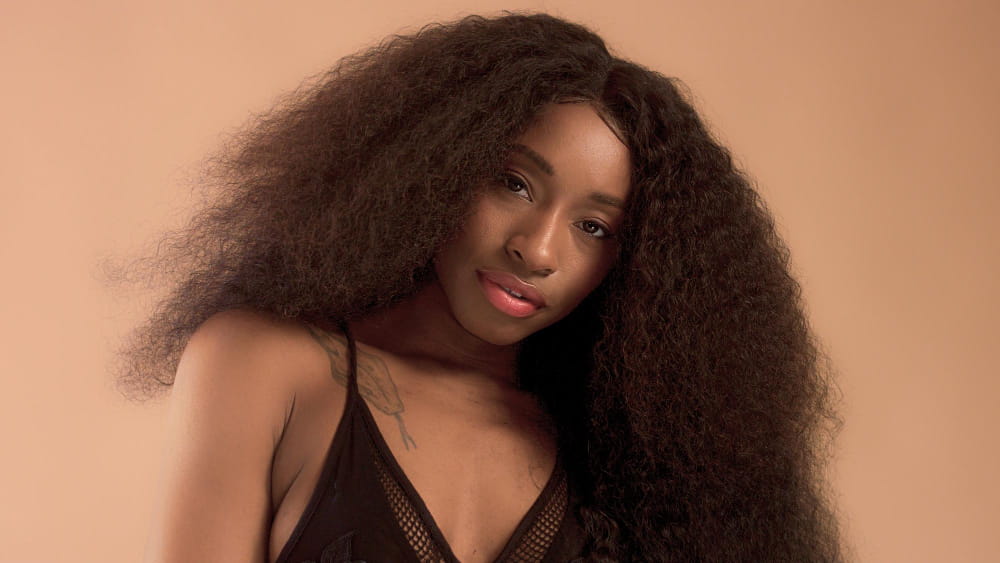
afro hair extensions
This guide explains the most important things to look for before buying Afro hair extensions and how to choose products that complement your natural beauty while offering long-lasting performance.
Why Many People Regret Buying Hair Extensions
One of the biggest reasons people become unhappy with their extensions is that they buy based on photos alone. Beautiful marketing images don't always tell the full story. Hair that looks soft and defined online may feel rough after the first wash if it has been heavily processed or coated with silicone.
Another common mistake is choosing extensions that don't match your natural hair texture. Even expensive extensions can look unnatural if the curl pattern is significantly different from your own hair. This often leads to excessive styling, heat damage, and frustration trying to achieve a seamless blend.
Buying quality afro hair extensions is an investment, and making an informed decision from the beginning often results in a style that is easier to maintain, lasts longer, and looks more natural throughout its lifespan.
Match the Texture Before Anything Else
The first thing to consider is how closely the extensions match your natural curl pattern. This has a greater impact on the finished style than almost any other factor.
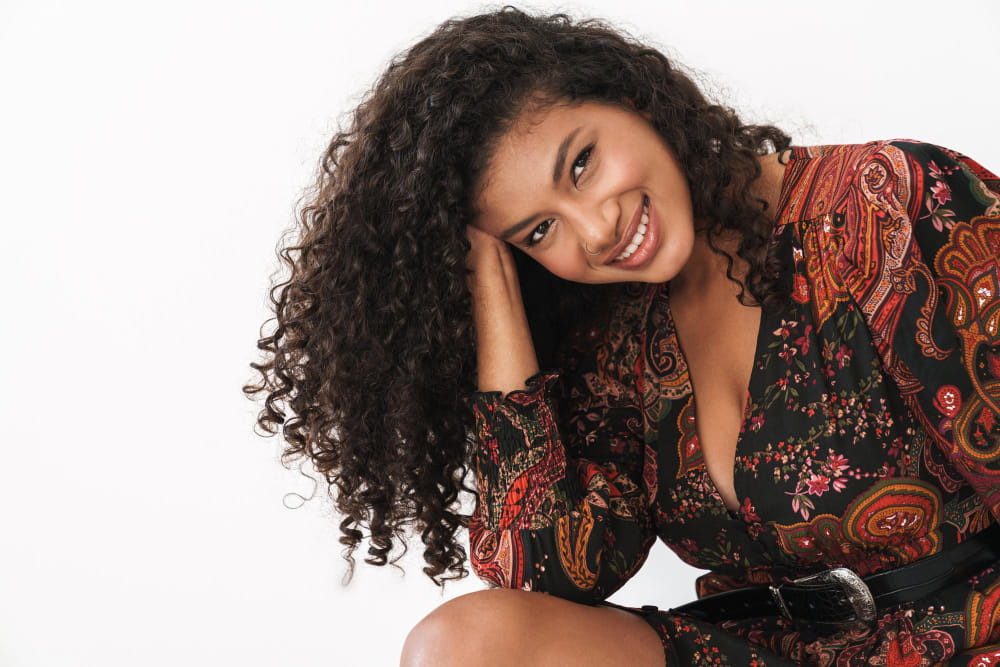
Afro Hair Extensions comes in many curl patterns, ranging from loose curls to tightly coiled textures. Choosing a similar pattern allows the extensions to blend naturally with your own hair while reducing the amount of daily styling required.
For example, someone with tightly coiled natural hair may find that kinky curly or deep curly extensions create the most seamless finish, while those with softer curls may prefer curly or loose curly textures. If you regularly wear your hair straightened, premium straight or body wave bundles may also provide excellent versatility.
Rather than choosing a texture simply because it looks attractive, think about how it will blend with your own hair on an everyday basis.
Choose 100% Human Hair Instead of Synthetic Hair
One of the most important decisions you'll make is whether to buy synthetic or human hair extensions.
Synthetic hair can be suitable for short-term styles or occasional wear, but it generally has a shorter lifespan and limited styling flexibility. It may become difficult to detangle over time and often cannot withstand frequent heat styling.
Premium human Afro Hair Extensions offers several advantages that make it a better long-term investment.
More natural appearance and movement
Can usually be heat styled and professionally colored
Lasts significantly longer with proper care
If you wear extensions regularly, investing in high-quality human hair is often more economical than repeatedly replacing lower-quality alternatives.
Understand the Difference Between Raw and Processed Hair
Not all human hair extensions are created equally.
Raw hair is collected with minimal processing, allowing it to retain its natural cuticle alignment and original characteristics. Because the cuticles remain intact and face the same direction, the hair generally experiences less friction, helping it stay smoother and easier to manage.
Processed hair, on the other hand, often undergoes chemical treatments, coloring, or steam processing to achieve a specific appearance. While it may initially look beautiful, repeated processing can reduce the hair's overall lifespan.
If you're looking for extensions that can last through multiple installs with proper maintenance, premium Raw Indian Hair is often preferred by professional stylists because of its durability, natural appearance, and versatility.
Think About How You'll Wear the Hair
Before purchasing, consider how you plan to install your extensions.
A sew-in designed for everyday wear may require different products than someone creating a custom wig or installing clip-in extensions for occasional styling. Likewise, customers wanting maximum scalp coverage may benefit from pairing bundles with an HD lace closure or lace frontal.
Thinking about your installation method before buying helps ensure all of your products work together to achieve the final look you're hoping for.
Daily Hair Maintenance Routine
Consider Your Daily Maintenance Routine
Every hair texture has different maintenance requirements. Being realistic about how much time you can dedicate to your hair each day will help you choose extensions you'll actually enjoy wearing.
Curly textures generally require more moisture to maintain curl definition, while straighter textures often require less daily maintenance but still benefit from regular conditioning and heat protection. The American Academy of Dermatology provides helpful guidance on maintaining healthy hair and scalp.
If you have a busy schedule, selecting a texture that fits naturally into your routine may be more satisfying than choosing a style that demands frequent attention.
Don't Focus Only on Length
Many buyers immediately choose the longest bundles available without considering how they fit their lifestyle.
Longer extensions certainly create dramatic results, but they also require additional maintenance, take longer to detangle, and may need more bundles to achieve a balanced appearance.
For many people, lengths between 16 and 24 inches offer an excellent balance between styling versatility and everyday practicality. If you're new to extensions, starting with a moderate length can make maintenance much easier while still providing plenty of styling options.
Buy From a Brand That Values Quality
Afro Hair Extensions are not something most people replace every few weeks. Choosing a trusted supplier can make a significant difference in your overall experience.
Look for brands that provide clear product information, realistic photos, transparent policies, and responsive customer support. Educational content is also a good sign that the company wants customers to make informed decisions rather than simply encouraging quick purchases.
A reputable supplier should make it easy to understand exactly what you're buying, including the hair type, texture, available lengths, and recommended care instructions.
Think About Long-Term Value Instead of Price
Price is naturally an important consideration, but it shouldn't be the only factor influencing your decision.
Lower-priced extensions may appear to save money initially, but frequent replacements can quickly become more expensive than purchasing premium Afro Hair Extensions that lasts through multiple installs.
Instead of asking which extensions are the cheapest, ask which ones will continue looking beautiful months from now. Long-lasting quality, easier maintenance, and greater styling flexibility often provide better overall value than the lowest upfront price.
Recommended Human Hair Products
If you're looking for premium-quality human hair afro hair extensions, consider products that match your styling goals rather than purchasing a one-size-fits-all solution. Proper scalp care is just as important as choosing quality extensions.
Many customers prefer combining Raw Indian Hair bundles with an HD lace closure or lace frontal to create a natural-looking hairline and versatile styling options. Those who prefer temporary styles may find clip-in extensions more suitable, while custom wigs offer flexibility for protective styling.
Choosing products designed to work together often creates a more polished and realistic finished look.
Frequently Asked Questions
What should I consider when choosing Afro hair extensions?
What should I consider when choosing Afro hair extensions?
The most important factors include matching your natural texture, choosing high-quality human hair, selecting the right installation method, considering your maintenance routine, and purchasing from a trusted supplier.
Are human hair extensions better than synthetic hair?
For most long-term users, yes. Human hair generally offers a more natural appearance, greater styling flexibility, and a longer lifespan when properly maintained.
Which texture blends best with Afro Hair Extensions?
The best texture is the one that most closely matches your natural curl pattern. Deep curly, curly, and kinky curly textures are popular choices depending on your hair type.
Can I color Afro Hair Extensions?
Many premium human hair extensions can be professionally colored. However, it's always recommended to perform a strand test and have coloring completed by an experienced stylist whenever possible.
With proper care, premium human hair extensions can often last for many months and may even be reused through multiple installations, depending on the hair quality and maintenance routine.
Final Thoughts
Knowing what to consider when choosing Afro hair extensions helps you make a confident purchase that fits both your style and your lifestyle. By focusing on texture, hair quality, installation method, maintenance, and long-term value instead of price alone, you'll be far more likely to enjoy extensions that look natural and continue performing well over time.
At Tressiri, we believe beautiful hair starts with exceptional quality. That's why we offer premium human hair extensions, including ethically sourced Raw Indian Hair bundles, HD lace closures, lace frontals, wigs, and clip-in extensions designed for natural-looking results and long-lasting performance.
The demand for premium raw Indian hair continues to grow across the United States as more salons, hairstylists, wig makers, and beauty entrepreneurs look for reliable wholesale suppliers. Customers today expect natural looking hair extensions with excellent longevity, making product quality more important than ever.
Choosing a trusted Raw Indian Hair Wholesale USA supplier offers more than just access to premium human hair. It provides dependable communication, professional support, transparent ordering, and the confidence that comes from working with a business that understands the needs of the U.S. beauty industry.
Whether you're opening a new salon, expanding your hair extension business, or searching for a long term supplier, understanding the wholesale buying process can help you make smarter purchasing decisions.
Raw Indian Hair Wholesale USA
Raw Indian Hair Wholesale USA?
Raw Indian hair wholesale USA refers to purchasing premium human hair in larger quantities directly from a distributor or supplier rather than buying individual retail pieces.
Wholesale purchasing is ideal for businesses that regularly install, customize, or resell human hair products.
Professionals often purchase wholesale because it provides:
Better inventory management
Consistent product availability
Competitive business pricing
Reliable supplier relationships
Easier planning for future client appointments
Rather than placing individual orders every week, wholesale buyers can maintain inventory that supports growing customer demand.
Why Raw Indian Hair Is in High Demand
Raw Indian hair has earned a strong reputation throughout the beauty industry because of its natural appearance and styling versatility.
When properly sourced and prepared, premium raw Indian hair offers numerous advantages.
It is valued for its:
Natural softness
Strong cuticle alignment
Long lifespan with proper care
Ability to blend naturally
Excellent styling flexibility
Professional appearance
These characteristics make raw Indian hair a preferred choice for hairstylists serving clients who expect premium results.
Why Beauty Businesses Prefer USA Wholesale Suppliers
Why Beauty Businesses Prefer USA Wholesale Suppliers
Many businesses once ordered directly from overseas suppliers. While international sourcing remains common, working with a USA based wholesale distributor often simplifies the buying experience.
Faster Communication
Questions about inventory, textures, lengths, or colors can usually be answered during normal U.S. business hours.
Easier Ordering
Wholesale buyers often appreciate a purchasing process that follows familiar payment methods and customer service expectations.
Professional Support
Reliable distributors help businesses choose products based on customer demand instead of simply processing transactions.
Faster Delivery
Depending on product availability, many wholesale orders can be fulfilled more quickly than direct international purchases.
Wholesale purchasing is designed for professionals and businesses that require consistent access to premium human hair.
Salon Owners
Salons benefit from maintaining inventory that allows them to serve clients without unnecessary delays.
Professional Hairstylists
Stylists who specialize in extensions often require multiple textures, colors, and lengths throughout the year.
Wig Makers
Custom wig creators value premium raw hair because it offers natural movement and excellent styling flexibility.
Hair Extension Businesses
Companies selling hair extensions can establish stronger customer relationships by working with dependable wholesale suppliers.
Beauty Entrepreneurs
Many new businesses begin with wholesale purchasing before expanding into larger product collections.
How to Choose a Raw Indian Hair Wholesale USA Supplier
Selecting the right supplier is one of the most important decisions for any beauty business.
Look for businesses that provide:
Product Transparency
Clear information about available textures, lengths, colors, and product specifications.
Responsive Customer Support
Questions should be answered promptly before and after purchase.
Multiple Product Categories
Professional suppliers typically offer more than one product type.
This may include:
Hair Bundles
HD Lace Closures
Lace Frontals
Clip In Extensions
Bulk Hair
Blonde Collections
Consistent Product Quality
Businesses benefit from suppliers who maintain quality standards across different product categories.
Wholesale Products Every Salon Should Stock
Wholesale Products Every Salon Should Stock
Successful salons often maintain a balanced inventory that serves different client preferences.
Popular wholesale products include:
Straight Hair Bundles
Ideal for sleek everyday styles and professional installations.
Wavy Hair Bundles
One of the most requested textures because of its natural movement.
Curly Hair Bundles
Perfect for customers seeking volume and defined curl patterns.
HD Lace Closures
Designed to create natural looking hairlines with flexible styling options.
HD Lace Frontals
A popular choice for clients who prefer versatile parting and styling possibilities.
Why USA Businesses Work with Tressiri
Tressiri combines authentic South Indian human hair sourcing with customer communication from our Texas office.
Our goal is to make wholesale purchasing straightforward by providing:
Premium South Indian human hair
Multiple textures and color options
Responsive USA customer support
Wholesale opportunities for qualified businesses
Carefully selected product collections
Delivery typically within 5 to 7 business days for many orders
Whether you're purchasing for a salon, wig business, or growing beauty brand, our team works to provide dependable service alongside premium products.
Frequently Asked Questions
Can individuals buy wholesale?
Wholesale purchasing is generally intended for salons, hairstylists, beauty professionals, and businesses, although requirements may vary depending on the supplier.
What products are available wholesale?
Many suppliers offer bundles, closures, frontals, clip in extensions, and other premium human hair products in multiple textures and colors.
Is raw Indian hair suitable for coloring?
Premium human hair can often be professionally colored and styled. Results depend on the condition of the hair and the techniques used.
Do wholesale suppliers ship across the USA?
Many USA based distributors provide shipping throughout the United States.
Working with a USA based distributor often provides easier communication, professional support, and a smoother purchasing experience.
Grow Your Business with a Trusted Wholesale Partner
Finding the right Raw Indian Hair Wholesale USA supplier is about building a long term business relationship, not simply placing an order. Reliable communication, premium product selection, and consistent service all contribute to a better experience for salons, hairstylists, and beauty entrepreneurs.
If you're looking to expand your inventory with authentic South Indian human hair, Tressiri offers premium bundles, HD lace closures, lace frontals, and wholesale opportunities backed by responsive Texas based customer support.
Explore our collection today and discover how premium raw Indian hair can help your business deliver exceptional results to every client.
USA South Indian Hair Distributor: Why More Professionals Are Buying Locally in 2026
The demand for authentic South Indian human hair continues to grow across the United States. Hairstylists, salon owners, wig makers, and individual customers are increasingly searching for reliable suppliers who can provide premium quality hair without the uncertainty of overseas communication and long shipping times.
Choosing a USA South Indian Hair Distributor combines the benefits of authentic Indian sourcing with the convenience of local customer support. Instead of managing international payments, customs concerns, and delayed communication, buyers can work with a distributor who understands both the product and the expectations of customers in the United States.
USA South Indian Hair Distributor
At Tressiri, we help connect customers with premium South Indian human hair through our Texas based operations while maintaining close relationships with trusted sourcing partners in India. This approach provides a smoother buying experience without compromising on quality.
What Is a USA South Indian Hair Distributor?
A USA South Indian Hair Distributor is a business that supplies authentic South Indian human hair to customers throughout the United States while providing local communication, customer service, and order support.
Unlike purchasing directly from overseas manufacturers, working with a USA distributor often provides several practical advantages:
Easier communication during business hours
Faster delivery within the United States when products are stocked locally
Better assistance before and after purchase
A more familiar purchasing process for businesses and individual buyers
For professionals who regularly purchase hair extensions, these benefits can save valuable time while reducing purchasing uncertainty.
Why South Indian Hair Is Highly Valued
South Indian human hair has earned an excellent reputation because of its naturally soft texture, strength, and versatility. When properly sourced and processed, it blends beautifully with many hair types and responds well to professional styling.
Many customers choose South Indian hair because it can often:
Maintain a natural appearance
Accept professional coloring and styling
Last longer with proper care
Blend naturally with different textures
These qualities have made South Indian hair a preferred option for salons, stylists, and customers looking for premium human hair extensions.
9 Reasons to Choose a USA South Indian Hair Distributor
1. Easier Communication
One of the biggest advantages of working with a USA based distributor is clear communication. Whether you have product questions, need guidance selecting the right texture, or require assistance with your order, reaching someone during normal U.S. business hours makes the process much easier.
At Tressiri, our customer communication is handled from Texas, making it convenient for customers across the United States.
2. Faster Delivery
International shipments can sometimes involve customs processing, longer transit times, and additional uncertainty.
A USA distributor can often provide faster shipping, especially for products that are already stocked domestically. Even when products are sourced directly from India, having a local support team helps keep customers informed throughout the process.
Many Tressiri orders are delivered within 5 to 7 business days, depending on product availability and destination.
3. Access to Authentic South Indian Human Hair
Authenticity matters.
Premium South Indian hair is known for its natural movement, softness, and durability. Working with a trusted distributor helps buyers understand exactly what they are purchasing, including available textures, lengths, and colors.
This transparency helps reduce confusion and builds confidence when investing in premium hair extensions.
4. Professional Guidance Before You Buy
Not every customer needs the same product.
Some may be looking for body wave bundles, while others need loose curly closures, straight frontals, or blonde extensions.
Professional Hairstylists
A knowledgeable distributor can help customers choose products that best match their styling goals instead of relying solely on product descriptions.
5. Multiple Textures and Color Options
Today's customers expect variety.
A reliable USA South Indian Hair Distributor should offer multiple textures and color choices to suit different preferences and professional applications.
Depending on availability, customers can often choose from:
Having multiple options available allows stylists and customers to create customized looks with confidence.
6. Wholesale Opportunities for Professionals
Many salon owners and beauty entrepreneurs prefer working with distributors who understand wholesale purchasing.
Instead of placing individual retail orders repeatedly, professionals can benefit from wholesale pricing, business support, and consistent sourcing for their growing customer base.
Whether you're starting a hair business or expanding an existing salon, working with a trusted distributor can simplify long term inventory planning.
7. Better Customer Support After Purchase
Excellent customer service does not end when an order ships.
Questions about installation, maintenance, product selection, or future purchases are easier to resolve when customers have access to local support.
This ongoing relationship often creates a better overall buying experience.
8. Reliable Product Selection
Professional buyers value consistency.
A trusted distributor works to provide products that meet quality expectations while offering detailed product information, realistic descriptions, and responsive customer service.
This consistency helps salons and stylists build confidence with their own clients.
9. A Better Overall Buying Experience
Buying premium human hair should feel straightforward, not stressful.
Working with a USA South Indian Hair Distributor combines authentic sourcing with local communication, making it easier to place orders, ask questions, and receive support throughout the purchasing process.
Who Benefits from Buying from a USA South Indian Hair Distributor?
A local distributor can serve a wide range of customers.
Salon Owners
Reliable sourcing helps maintain consistent service quality while reducing purchasing uncertainty.
Professional Hairstylists
Stylists benefit from access to multiple textures, colors, and premium human hair products suitable for different client needs.
Wig Makers
Authentic South Indian hair is valued for creating natural looking custom wigs with excellent styling flexibility.
Hair Extension Businesses
Businesses looking to expand their product offerings can benefit from wholesale purchasing opportunities and dependable supplier relationships.
Individual Customers
Customers shopping for personal use appreciate professional guidance, responsive communication, and high quality products.
How Tressiri Sources South Indian Human Hair
Tressiri works with trusted sourcing partners in India while providing customer communication and support from our Texas office.
Buying from a USA South Indian Hair Distributor
Our goal is to help customers access premium South Indian human hair through a purchasing experience that emphasizes transparency, quality, and responsive service.
We offer a growing collection that includes human hair bundles, HD lace closures, lace frontals, and selected color options designed to meet the needs of both professionals and everyday customers.
Frequently Asked Questions
Is South Indian Hair considered premium?
South Indian human hair is widely recognized within the hair extension industry for its natural appearance, softness, durability, and styling versatility when properly sourced.
Do you offer wholesale purchasing?
Yes. Tressiri offers wholesale options for qualified salons, hairstylists, beauty businesses, and professional buyers interested in larger orders.
How long does delivery take?
Many orders are delivered within 5 to 7 business days, depending on product availability and shipping destination.
What textures are available?
Available textures may include Straight, Wavy, Curly, and Loose Curly, along with multiple color options depending on inventory.
Do you ship across the United States?
Yes. Tressiri serves customers throughout the United States.
Why Choose Tressiri?
Finding the right USA South Indian Hair Distributor is about more than simply purchasing hair. It is about working with a supplier who values quality, communication, and long term relationships.
Premium South Indian human hair
Whether you are a salon owner looking for dependable wholesale sourcing, a hairstylist searching for premium human hair, or an individual customer seeking authentic South Indian extensions, Tressiri is committed to providing professional support and carefully selected products.
Explore our collection of premium South Indian human hair products, or contact our Texas team to learn more about wholesale opportunities and product recommendations tailored to your needs.
The demand for Raw Indian Hair has grown tremendously over the last few years. More women are searching for hair that looks natural, lasts longer, and blends beautifully with their own hair. Unfortunately, as demand increases, so does confusion. Today, many products are advertised as "raw" even when they have gone through chemical treatments, steam processing, or texture alteration before reaching the customer.
If you've ever wondered why one seller charges $70 for a bundle while another charges $180 for what appears to be the same thing, you're not alone. Price differences often reflect differences in quality, sourcing, and processing. Understanding those differences can help you avoid disappointment and invest in hair that truly delivers long term value.
This guide explains what genuine Raw Indian Hair really is, how it differs from processed hair, and the practical signs every buyer should know before making a purchase.
Close up of aligned cuticles on Raw Indian Hair
What Is Raw Indian Hair?
Raw Indian Hair is human hair collected in its natural state without chemical straightening, texture alteration, silicone coating, or permanent processing. Each bundle retains its original cuticle direction, natural movement, and unique texture.
Unlike factory processed hair that is manufactured to look identical, authentic Raw Indian Hair embraces natural variation. One bundle may have a softer wave while another has slightly tighter movement because every donor has different hair characteristics.
These natural differences are actually a sign of authenticity rather than inconsistency.
Because the hair has not been heavily processed, it generally responds better to washing, coloring, heat styling, and regular maintenance. With proper care, premium Raw Indian Hair can last significantly longer than heavily processed alternatives.
Why Is There So Much Confusion About "Raw" Hair?
The word raw has become one of the most frequently used marketing terms in the hair industry. Unfortunately, there is no universal certification that requires every supplier to meet the same definition.
Some manufacturers label steam textured hair as raw because it contains human hair. Others chemically process hair, wash it with strong solutions, apply silicone coatings, and still advertise it as "100% Raw."
For customers, this creates a difficult situation. Two websites may both advertise Raw Indian Hair while selling products of completely different quality.
That is why buyers should focus less on marketing labels and more on understanding how the hair was sourced and handled before it reached them.
Genuine Raw Hair Tells Its Own Story
One of the easiest ways to recognize authentic Raw Indian Hair is by accepting that perfection is not always natural.
Many first time buyers expect every bundle to have identical curls, identical color, identical shine, and identical thickness. Ironically, these perfectly matching bundles are often the result of factory processing rather than natural collection.
Real Raw Indian Hair usually includes subtle variations that reflect its human origin.
You may notice slight differences in wave pattern, natural brown undertones, or individual strand thickness. These characteristics are not defects. Instead, they are reminders that the hair came from real people rather than a production line designed to make every bundle look exactly alike.
How Factory Processed Hair Is Different
Factory processed hair often begins as collected human hair, but it goes through several additional steps before reaching customers.
During manufacturing, different hair types may be mixed together before chemical treatments remove inconsistencies. Strong cleaning agents strip the hair, steam machines create new curl patterns, silicone coatings add artificial shine, and dyes create uniform colors across every bundle.
At first glance, processed hair often looks extremely attractive.
It may appear shinier than Raw Indian Hair immediately after opening the package. However, that appearance can change after several washes as coatings gradually disappear.
This doesn't mean every processed product is poor quality. Many processed extensions perform well for customers seeking temporary styling. However, buyers looking for premium longevity often prefer genuine Raw Indian Hair because it maintains its natural structure.
Five Signs You May Be Looking at Genuine Raw Indian Hair
Rather than relying on marketing claims alone, pay attention to what you actually see.
Slight variation in texture from bundle to bundle.
Natural dark brown or off black shades instead of artificial jet black.
Soft movement without excessive silicone shine.
Minimal chemical odor.
Hair that becomes even softer after washing instead of losing quality.
No single characteristic guarantees authenticity, but together they create a much clearer picture than advertising slogans alone.
Signs That Should Make Buyers Ask More Questions
Some products deserve closer inspection before purchasing.
Extremely uniform curl patterns, unusually glossy finishes, perfectly identical bundles, or prices that seem dramatically lower than the rest of the market should encourage buyers to ask additional questions rather than making assumptions.
Responsible sellers should be comfortable explaining:
Where the hair originates.
Whether the texture is natural.
Whether the hair has been chemically altered.
Whether silicone coatings are applied.
How the hair should be maintained.
Transparent answers often indicate a supplier who understands and stands behind their products.
Why South Indian Hair Has Earned a Strong Reputation
Among premium hair extension buyers, South Indian Hairhas developed a reputation for its naturally soft texture, strength, and versatility.
Its fine to medium strand thickness allows it to blend beautifully with many natural hair types while still offering enough durability for repeated styling. Whether worn straight, wavy, or curled, high quality South Indian Hair retains movement that many customers appreciate.
Because every donor is unique, authentic South Indian Hair also preserves the subtle individuality that makes Raw Indian Hair look realistic rather than manufactured.
South Indian Hair before installation
Why Does Genuine Raw Indian Hair Cost More?
One of the most common questions buyers ask is why two bundles that appear similar can have such different prices. While marketing plays a role, the biggest factor is the amount of work required to source and preserve genuine Raw Indian Hair without compromising its natural quality.
Unlike factory processed hair, authentic Raw Indian Hair is not mass produced to meet a specific texture or appearance. Every bundle begins with naturally donated or collected human hair that must be carefully sorted by length, texture, and quality. Skilled workers inspect the strands to ensure the cuticles remain aligned, reducing tangling and helping the hair maintain its natural movement.
The collection process also results in a smaller supply compared to factory hair. Since every donor has unique characteristics, manufacturers cannot simply create unlimited quantities of identical bundles. This limited availability naturally increases the value of premium Raw Indian Hair.
When customers purchase high quality hair, they are investing in careful sourcing, skilled craftsmanship, and durability rather than simply paying for the bundle itself.
Common Myths About Raw Indian Hair
As Raw Indian Hair has become more popular, many misconceptions have spread across social media and online marketplaces. Understanding these myths can help buyers make informed decisions.
Myth 1: Every Raw Hair Bundle Should Look Exactly the Same
This is one of the biggest misconceptions.
Natural human hair varies from person to person. Slight differences in wave pattern, density, or shade are normal and often indicate authenticity. Perfectly identical bundles are more commonly associated with factory processing than naturally collected hair.
Myth 2: Shinier Hair Is Always Better
Many buyers are immediately attracted to extremely glossy bundles.
However, excessive shine is often created by silicone coatings applied during manufacturing. These coatings may wash away after several shampoos, revealing hair that looks completely different from its original appearance.
Natural Raw Indian Hair usually has a healthy, soft shine rather than an artificial glossy finish.
Myth 3: Raw Hair Never Sheds
Every human hair extension can experience some shedding over time.
Even premium Raw Indian Hair may lose a few strands during washing or brushing. Excessive shedding, however, often indicates poor weft construction or damage caused during processing.
Proper installation and gentle maintenance help minimize shedding and extend the life of the extensions.
Myth 4: All Indian Hair Is Raw Hair
This is not true.
India produces many types of hair products. Some remain completely natural, while others are chemically treated, steam textured, dyed, or silicone coated before export.
The country of origin alone does not determine whether the hair is truly raw.
Premium human hair extensions with natural movement
Questions Every Buyer Should Ask Before Purchasing
Rather than focusing only on price, experienced buyers ask questions that reveal how the hair has been sourced and handled.
A trustworthy supplier should be comfortable discussing:
Is the texture naturally occurring or factory created?
Has the hair been chemically processed?
Are the cuticles aligned?
Can the hair be colored safely by a professional?
How long does the hair typically last with proper care?
What maintenance routine do you recommend?
Is there a return or exchange policy?
Suppliers who openly answer these questions usually demonstrate greater transparency and confidence in their products.
How to Care for Raw Indian Hair
Buying premium Raw Indian Hair is only the beginning. Proper care plays a significant role in maintaining softness, reducing tangling, and extending the life of your investment.
Start by washing the hair with a sulfate free shampoo designed for human hair extensions. Focus on cleansing the strands gently rather than scrubbing aggressively. Follow with a moisturizing conditioner to maintain softness and flexibility.
After washing, gently squeeze out excess water using a microfiber towel instead of rubbing the hair. Allow the extensions to air dry whenever possible. If heat styling is necessary, always use a quality heat protectant to reduce unnecessary stress on the strands.
Brushing should begin at the ends before gradually working upward. Using a wide tooth comb or extension friendly brush helps reduce unnecessary pulling and minimizes shedding.
At night, loosely braid long extensions or wrap them in a silk or satin scarf. This simple habit helps prevent friction while sleeping and keeps the hair smoother between washes.
When swimming, rinse the hair immediately after exposure to chlorine or saltwater. These substances can gradually dry out even the highest quality human hair if left untreated.
With consistent care, premium Raw Indian Hair can maintain its beauty through multiple installations, making it a valuable long term investment.
How Tressiri Approaches Quality
At Tressiri, we understand that buying premium hair is about more than appearance. Customers deserve confidence in what they are purchasing.
Our focus is on offering carefully selected South Indian Hair that preserves its natural beauty, softness, and versatility. Rather than chasing trends or relying on exaggerated marketing claims, we believe in educating customers so they can make informed decisions based on quality, transparency, and realistic expectations.
Every customer has different styling goals, and choosing the right extensions begins with understanding the differences between natural and heavily processed hair.
South Indian Bulk Hair
Frequently Asked Questions
Is Raw Indian Hair always black?
No. Genuine Raw Indian Hair naturally varies in shade, ranging from dark brown to natural black. Slight color differences are completely normal.
Can Raw Indian Hair be colored?
Yes. Because it has not undergone heavy chemical processing, premium Raw Indian Hair generally responds well to professional coloring. However, bleaching or coloring should always be performed by an experienced stylist to help preserve the hair's integrity.
How long does Raw Indian Hair last?
With proper care, high quality Raw Indian Hair can last well beyond a year and often through multiple installations. Longevity depends on maintenance, styling habits, and how frequently the hair is worn.
Is every expensive bundle genuine Raw Hair?
Not necessarily. Price alone does not guarantee authenticity. Buyers should also consider transparency, sourcing information, customer reviews, and the supplier's reputation.
Does Raw Indian Hair tangle?
Properly sourced and well maintained Raw Indian Hair should experience minimal tangling. Like natural hair, however, neglect, product buildup, or improper care can increase tangling over time.
Final Thoughts
Choosing Raw Indian Hair is about more than following a trend. It is about understanding the difference between natural quality and factory processing, asking the right questions, and investing in hair that offers lasting value.
As more products enter the market, buyers who educate themselves are better equipped to recognize authentic craftsmanship and avoid misleading marketing claims. Natural variation, transparent sourcing, proper maintenance, and realistic expectations all contribute to a better purchasing experience.
Whether you are purchasing your first bundle or adding to an existing collection, taking the time to understand genuine Raw Indian Hair will help you make a more confident decision.
If you are looking for premium South Indian Hair that prioritizes quality and transparency, explore Tressiri's collection of carefully selected human hair extensions and discover the difference authentic craftsmanship can make.